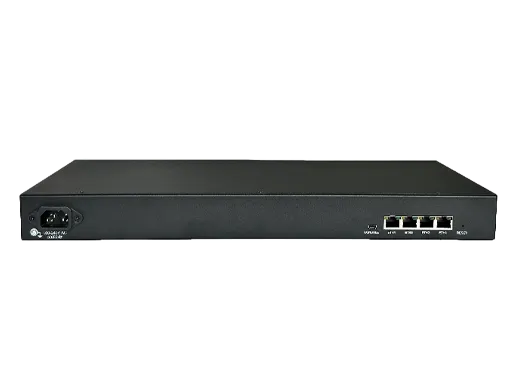
The Becke IPGA-16O FXO Gateway is built for organizations that need stable, high-capacity analog trunk access in a modern SIP-based voice environment. With 16 FXO ports, it is well suited for connecting PSTN lines or analog PBX resources into IP telephony platforms while keeping deployment practical, scalable, and easy to manage.
For businesses moving toward hybrid communications, it provides a reliable way to retain existing trunk resources while improving overall voice flexibility. As a premier solution from Becke Telcom, this gateway eliminates the friction typically associated with legacy infrastructure upgrades, delivering crystal-clear audio and enterprise-grade reliability.
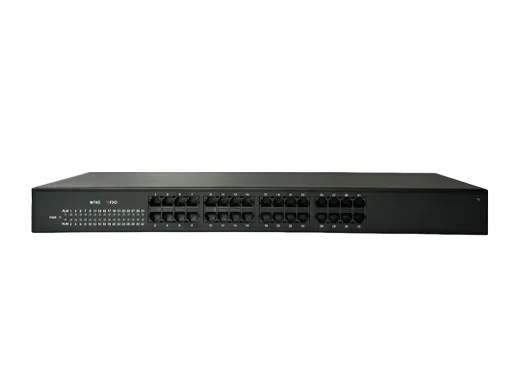
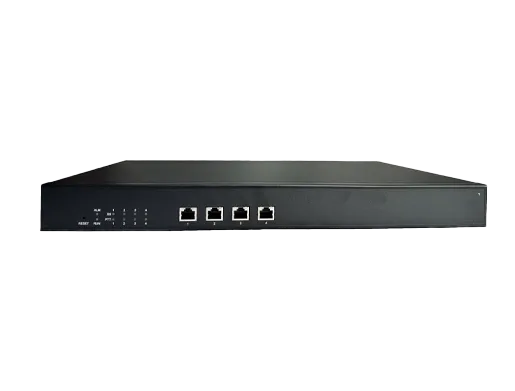
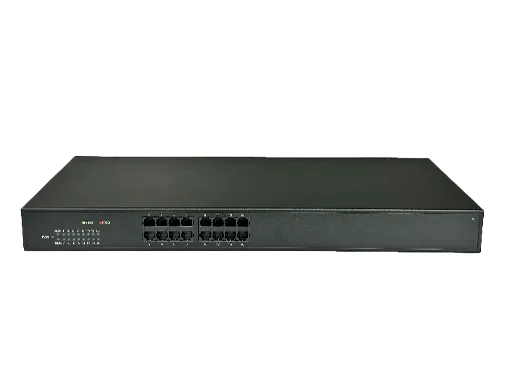
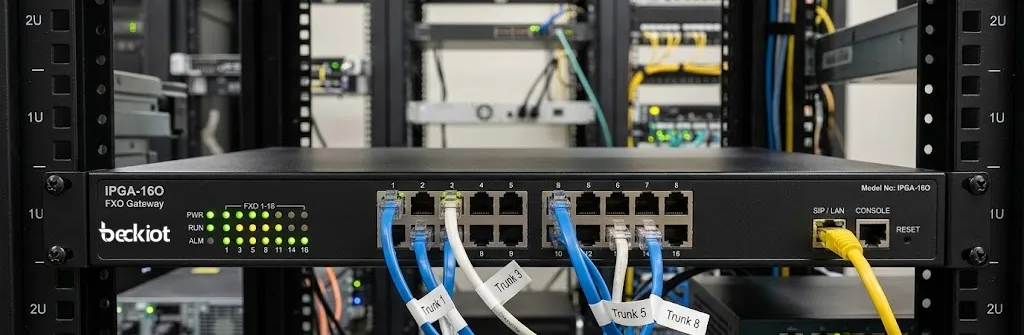
IPGA-16O FXO Gateway designed for high-capacity analog trunk access in SIP-based voice networks.
Built for Enterprise-Grade Deployment
16 FXO ports for larger trunk access requirements
The biggest product advantage of the IPGA-16O is its 16-port FXO capacity. It is a strong fit for sites that need to connect more carrier lines or analog PBX trunks into an IP voice system without stepping up to a more complex platform. This makes it highly suitable for growing businesses and distributed communication projects.
By offering 16 dedicated ports in a single rack-mountable device, Becke Telcom allows IT administrators to consolidate hardware. This reduces the need to stack multiple smaller gateways, thereby saving valuable rack space and simplifying cable management in server rooms.
Furthermore, this high-density design provides built-in scalability. Organizations can start by utilizing only a fraction of the ports and seamlessly activate more lines as their call volume and business operations expand, ensuring a future-proof investment.
Strong interoperability with SIP platforms
The gateway supports SIP and IMS environments and is designed to interoperate with leading softswitches, IP PBXs, and SIP servers. This allows the product to fit more naturally into mixed-vendor voice deployments and gives system integrators more flexibility when designing hybrid communication architectures.
Becke Telcom has rigorously tested the IPGA-16O against mainstream unified communications platforms including BroadSoft, 3CX, Asterisk, and FreePBX. This guaranteed compatibility eliminates the frustrating protocol translation errors often found in complex voice networks.
System integrators greatly benefit from this open standard approach. It frees businesses from strict vendor lock-in, enabling them to choose the best-in-class IP PBX software while relying on Becke hardware for rock-solid physical trunk connections.
Practical value for hybrid migration
For many organizations, the priority is not immediate replacement of analog trunk resources, but better integration of those resources into a modern voice network. The IPGA-16O supports that goal by helping preserve working PSTN access while improving routing, central control, and scalability on the SIP side.
It provides a highly cost-effective bridge. Companies can maximize the return on investment for their existing long-term PSTN carrier contracts while simultaneously enjoying the rich collaborative features of next-generation VoIP systems.
IT departments can seamlessly manage this transition over time. Rather than executing a risky, overnight "rip and replace" of their entire phone system, they can use the gateway to migrate branches or departments to IP telephony at their own controlled pace.
A strong 16 FXO gateway should not only connect analog trunks. It should also help businesses build a more flexible and manageable communication architecture around them, ensuring seamless transitions without operational downtime.
Functional Capabilities
Flexible routing and dial plan control
The IPGA-16O supports flexible routing and dial plans, making it easier to adapt the gateway to branch calling needs, local PSTN breakout, centralized call policies, and multi-site voice environments. This flexibility is important in real deployments where call flows often need to be optimized by site, cost, or operational priority.
Administrators can easily implement advanced logic such as time-based routing, caller ID manipulation, and prefix-based carrier selection. This ensures that outbound calls automatically take the most cost-effective route available.
In the event of an IP network outage, these intelligent routing rules act as a critical safety net. The gateway can be configured to automatically failover and route internal traffic out through local copper lines, keeping the business connected to the outside world.
Business telephony features for daily operations
The gateway supports a practical set of business calling functions, including call waiting, call transfer, call forwarding, speed dial, hunting group, do not disturb, music on hold, voice mail indication, and 3-way conference. These features help the product operate as part of a complete business telephony workflow rather than as a simple access device.
By integrating these essential features at the hardware level, the IPGA-16O ensures a smooth and familiar experience for end-users. Employees can handle complex call scenarios seamlessly, improving overall workplace productivity and customer service quality.
Superior voice quality is maintained throughout all these operations. With advanced echo cancellation, dynamic jitter buffers, and support for high-compression voice codecs like G.729 alongside standard G.711, every call remains crisp and clear.
Security and service continuity
The platform supports TLS and SRTP for secure signaling and media, along with carrier-grade reliability, embedded system architecture, and main or secondary SIP server failover. These capabilities make it a stronger choice for organizations that require dependable voice access and more resilient operation across business-critical environments.
Additionally, the device is equipped with robust built-in defense mechanisms. This includes dynamic IP blocklists, anti-brute force attack protection, and SIP access control to shield your internal network from malicious external threats.
Redundancy is a core focus for Becke Telcom. The gateway's architecture continuously monitors the health of the primary SIP server and will instantaneously reroute active sessions to a backup server if an anomaly is detected, guaranteeing zero disruption.
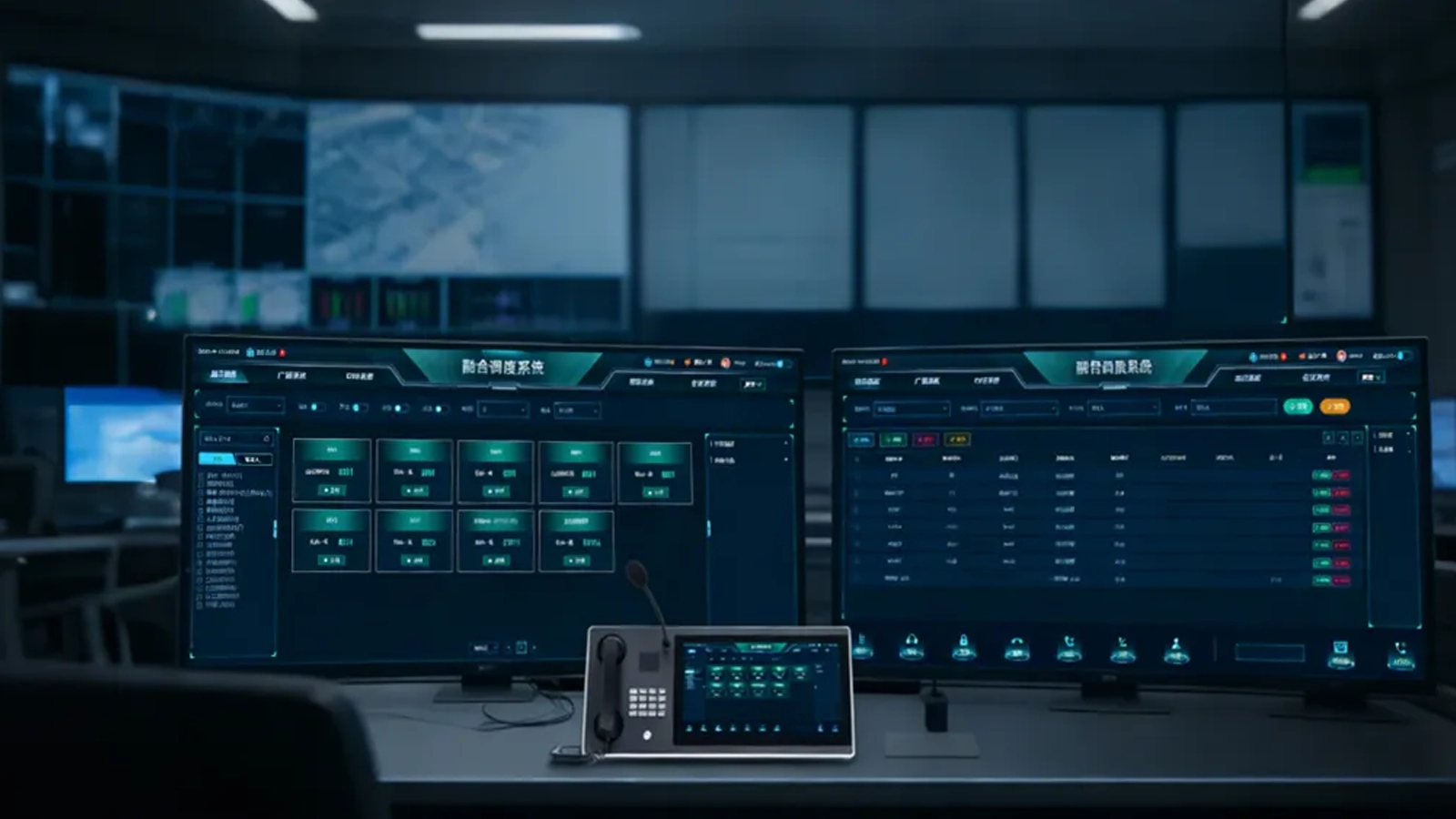
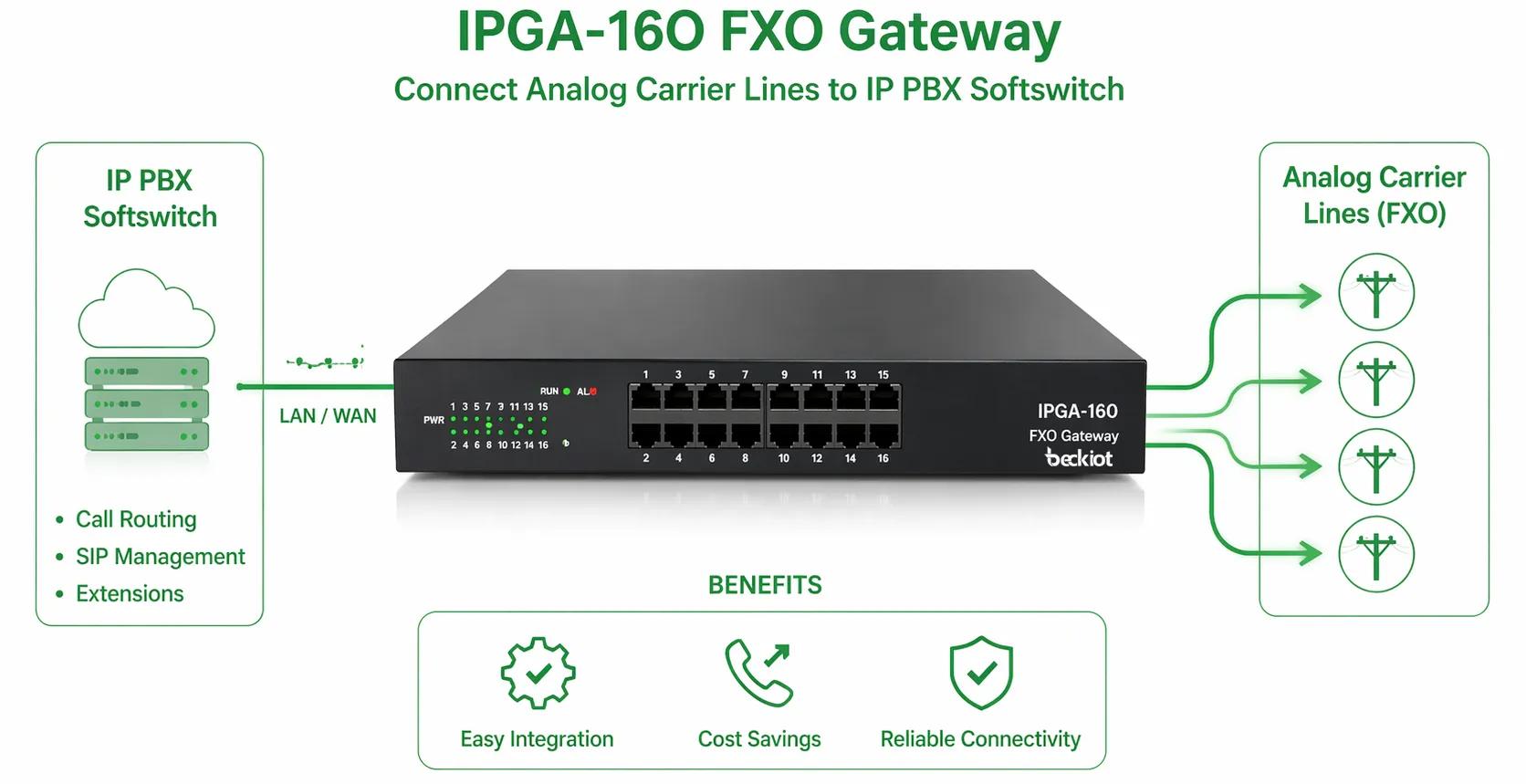
Designed to integrate analog carrier lines with IP PBX, softswitch, and SIP server platforms.
Management and Deployment Advantages
Easy web-based administration
The IPGA-16O includes an intuitive web management interface that helps reduce setup complexity and improve daily administration efficiency. This makes it easier for installers, resellers, and IT teams to complete deployment and maintain consistent configuration standards.
The centralized dashboard provides real-time monitoring of port status, active calls, and hardware performance. Administrators can visualize network health at a glance without navigating through complicated command-line interfaces.
Firmware upgrades, log exports, and configuration modifications are all handled through this secure GUI. Multi-level access controls also allow organizations to assign read-only troubleshooting rights to junior staff while reserving core system changes for senior engineers.
Remote maintenance support
Support for SNMP, TR-069, automated provisioning, configuration backup and restore, and cloud-based management improves operational efficiency for enterprises and service providers managing multiple sites. This is especially valuable in branch and multi-location projects where remote access saves time and lowers maintenance costs.
Service providers can leverage these remote capabilities for zero-touch mass deployments. By utilizing TFTP, HTTP, or HTTPS, hundreds of gateways can automatically securely pull their unique configurations from a central server upon bootup.
Advanced diagnostic utilities, such as packet capture and syslog integration, are fully accessible remotely. When an issue occurs, support teams can immediately isolate and resolve the problem from headquarters, drastically reducing expensive on-site technician visits.
Ready for managed IP networks
With support for IPv4, IPv6, QoS, and VLAN tagging, the gateway is easier to deploy in structured enterprise and operator networks. It fits well into environments where traffic prioritization, logical segmentation, and stable voice quality are part of normal network requirements.
Voice traffic prioritization (QoS) ensures that active calls are never impacted by heavy data downloads on the same network. By strictly prioritizing SIP signaling and RTP media streams, latency and jitter are virtually eliminated.
The inclusion of dual-stack IPv4 and IPv6 support further highlights the gateway's modern architecture. As global IP address standards evolve, the IPGA-16O is fully prepared to transition seamlessly without requiring any hardware upgrades.
Application Scenarios
Small and medium-sized businesses
The IPGA-16O is a strong option for SMB users that need larger analog trunk capacity while moving toward SIP-based communications. It offers a balance of port density, feature support, and manageable deployment without unnecessary complexity.
It allows growing companies to maximize their current PSTN investments. Instead of paying premium fees to completely overhaul their incoming lines, SMBs can digitize their existing copper lines and distribute them efficiently to IP phones across the office.
Call centers and service organizations
For call centers and customer service environments, the gateway provides dependable analog trunk access while fitting into broader voice platforms that depend on routing flexibility, conferencing, and reliable communication performance.
The gateway easily handles high-volume concurrent calls without degradation in voice quality. Its robust integration with SIP-based CRM dialers makes it an indispensable tool for outbound marketing teams and inbound support desks alike.
Branch offices and remote sites
The gateway is well suited for branch offices and remote locations that need local PSTN access but still want to remain connected to a centralized IP voice architecture. This helps organizations combine local survivability with unified communication control.
It guarantees local survivability in the worst-case scenarios. If the wide area network (WAN) link to corporate headquarters fails, branch office employees can still make and receive critical calls utilizing the local analog lines connected to the IPGA-16O.
Multi-site enterprise deployments
For enterprises operating across multiple branches, the IPGA-16O helps standardize hybrid voice access by bringing analog trunk resources into a wider SIP network. This makes it easier to scale services and maintain consistency without forcing immediate replacement of working line infrastructure.
By standardizing on the Becke IPGA-16O, global enterprises can enforce unified dial plans across geographic boundaries. Internal calls between branches are routed freely over the IP network, while local gateways manage localized PSTN breakouts to avoid long-distance toll charges.
Becke Telcom remains committed to delivering enterprise-grade VoIP equipment that bridges the gap between legacy infrastructure and next-generation unified communications, providing businesses with absolute reliability.
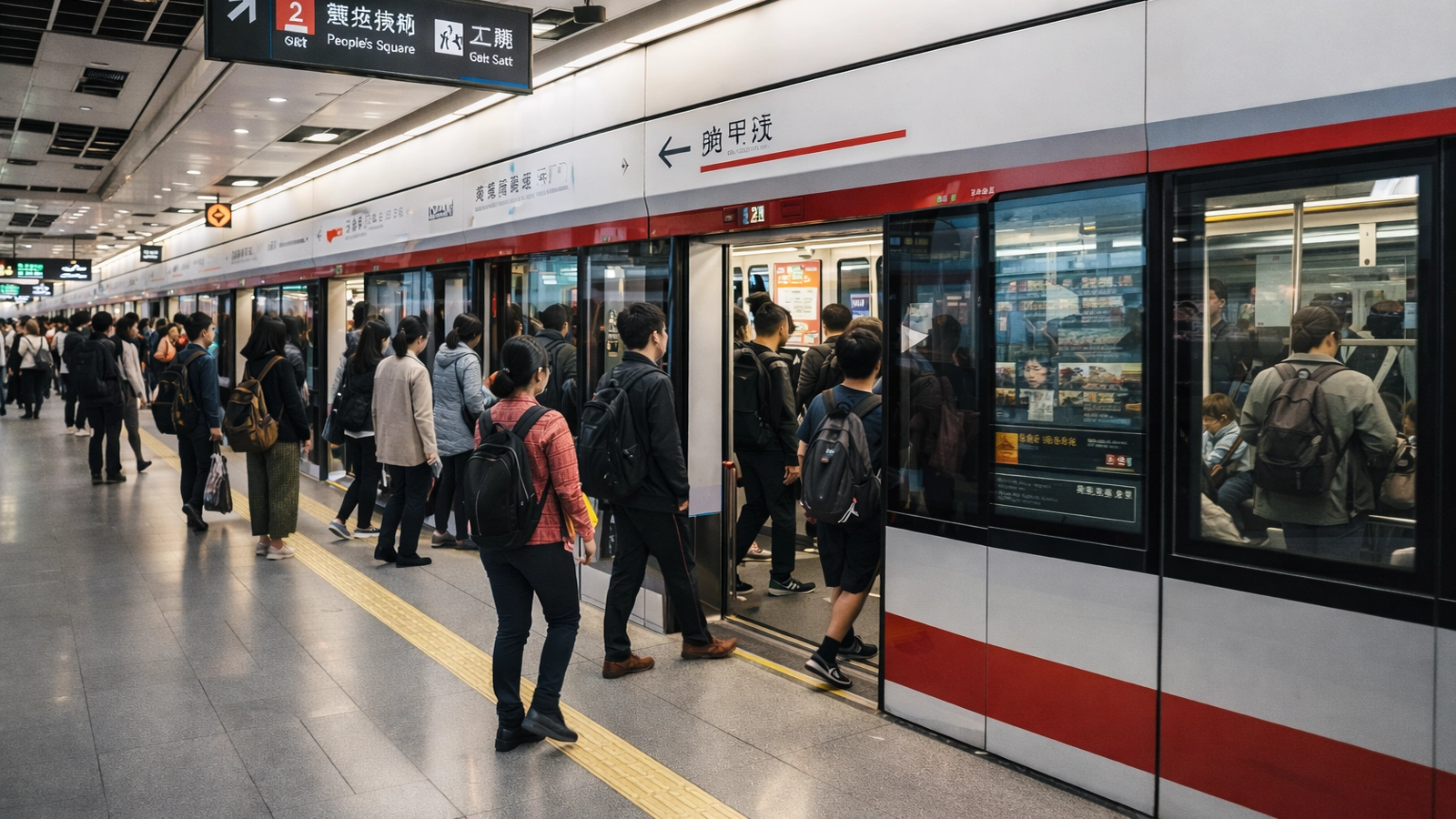
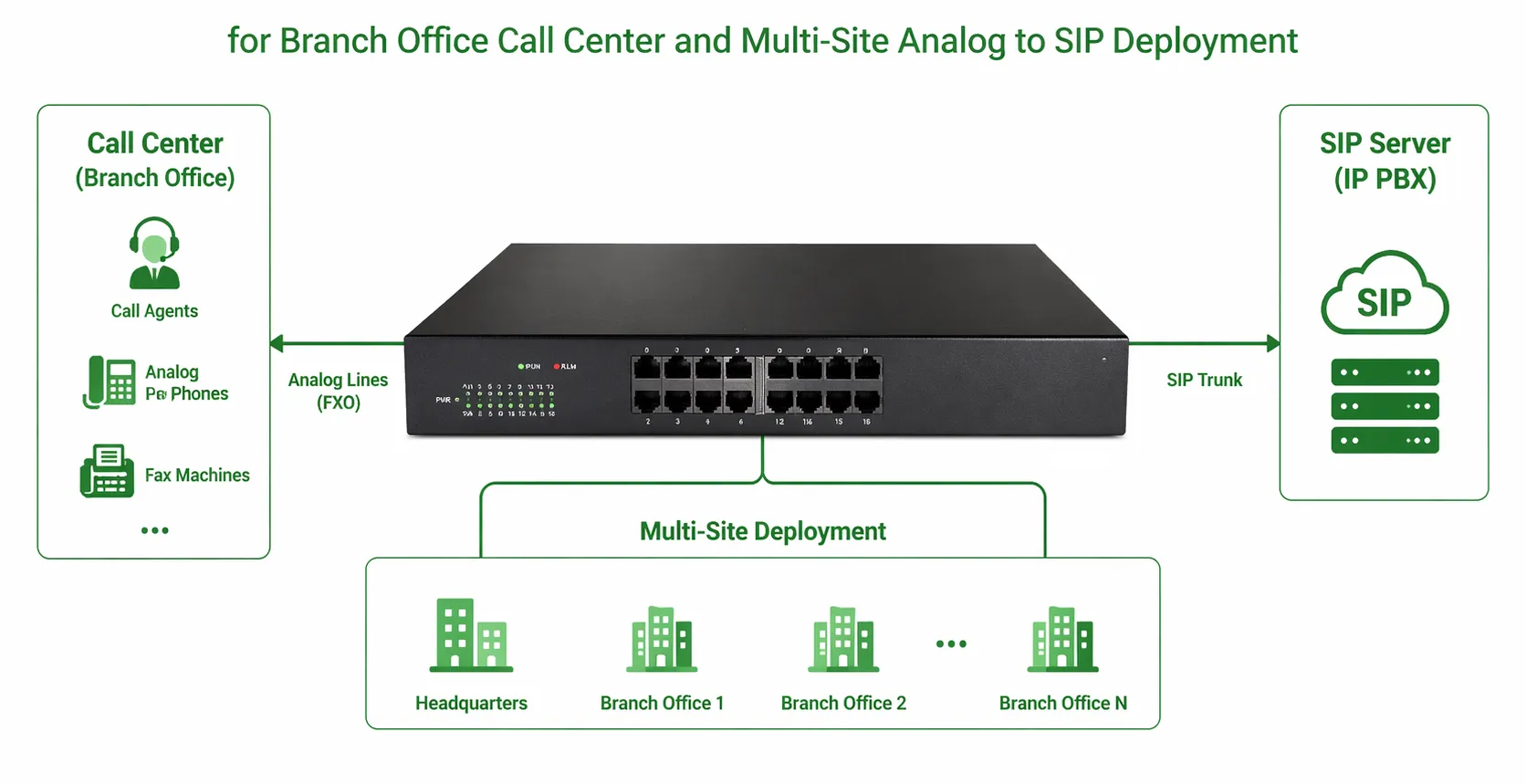
Well suited for SMB, branch office, call center, and multi-site analog-to-SIP deployments.
Why Choose the Becke IPGA-16O FXO Gateway
The Becke IPGA-16O stands out by combining 16 FXO analog trunk ports, strong SIP interoperability, flexible routing, practical telephony features, secure voice transmission, and scalable remote management in one compact platform.
For buyers that need higher trunk capacity without adding unnecessary operational complexity, it offers a strong balance of current business value and long-term migration support. By choosing Becke Telcom, organizations secure a robust, high-performance gateway that adapts dynamically to the ever-evolving landscape of modern enterprise communications.
FAQ
What is the main value of the IPGA-16O FXO Gateway?
Its main value is providing 16 FXO ports for analog trunk access while integrating those lines into SIP and IMS communication environments seamlessly.
This bridges the gap between traditional PSTN lines and modern IP-PBX systems, allowing businesses to upgrade their internal phone networks to VoIP while retaining their existing analog carrier contracts.
Who is this gateway best suited for?
It is well suited for small and medium-sized businesses, call centers, branch offices, remote sites, and enterprises with multiple branches that still rely on analog trunk resources.
System integrators and managed service providers also find it highly beneficial due to its easy mass deployment capabilities, high compatibility, and robust remote management tools.
Can the IPGA-16O work with mainstream SIP platforms?
Yes. It is designed for interoperability with leading softswitches, IP PBXs, SIP servers, and IMS or NGN-based communication systems.
Becke Telcom has ensured compatibility with major brands like BroadSoft, 3CX, Asterisk, and various open-source SIP routing engines, ensuring it fits easily into almost any network topology.
Does it support flexible routing?
Yes. Flexible routing and dial plan control are among its core strengths, making it useful in hybrid, branch, and multi-site voice deployments.
You can configure prefix-based routing, time-of-day rules, and backup routing parameters, ensuring that voice traffic flows over the most efficient and cost-effective pathways available.
Is the gateway suitable for secure business deployment?
Yes. It supports TLS and SRTP, helping protect signaling and media traffic in professional voice networks.
Additionally, it includes anti-DDoS features, dynamic blocklists, and strict access controls to prevent unauthorized access and protect against common VoIP network attacks.
Is it easy to deploy and manage remotely?
Yes. Web-based management, SNMP, TR-069, automated provisioning, backup and restore, and cloud management support make it easier to deploy and maintain across multiple sites.
These tools empower IT administrators to push configurations to hundreds of devices automatically, minimizing the need for physical on-site technical support and reducing operational overhead.
Can it be used in branch office environments?
Yes. It is a practical choice for branch offices that need local PSTN access while remaining connected to a broader SIP-based communication system.
It provides crucial failover capabilities; if the internet connection to the main office drops, the branch can still place emergency and localized calls via the attached FXO lines.
Why choose a 16 FXO gateway instead of a smaller model?
A 16 FXO gateway is a better fit when a site needs higher analog trunk capacity, easier scaling, and stronger support for multi-line business communication scenarios.
Stacking multiple smaller gateways can lead to messy cabling, higher power consumption, and complicated management. A single 16-port device consolidates the hardware, offering a much cleaner and more professional solution.
We use cookie to improve your online experience. By continuing to browse this website, you agree to our use of cookie.
Cookies
This Cookie Policy explains how we use cookies and similar technologies when you access or use our website and related services. Please read this Policy together with our Terms and Conditions and Privacy Policy so that you understand how we collect, use, and protect information.
By continuing to access or use our Services, you acknowledge that cookies and similar technologies may be used as described in this Policy, subject to applicable law and your available choices.
Updates to This Cookie Policy
We may revise this Cookie Policy from time to time to reflect changes in legal requirements, technology, or our business practices. When we make updates, the revised version will be posted on this page and will become effective from the date of publication unless otherwise required by law.
Where required, we will provide additional notice or request your consent before applying material changes that affect your rights or choices.
What Are Cookies?
Cookies are small text files placed on your device when you visit a website or interact with certain online content. They help websites recognize your browser or device, remember your preferences, support essential functionality, and improve the overall user experience.
In this Cookie Policy, the term “cookies” also includes similar technologies such as pixels, tags, web beacons, and other tracking tools that perform comparable functions.
Why We Use Cookies
We use cookies to help our website function properly, remember user preferences, enhance website performance, understand how visitors interact with our pages, and support security, analytics, and marketing activities where permitted by law.
We use cookies to keep our website functional, secure, efficient, and more relevant to your browsing experience.
Categories of Cookies We Use
Strictly Necessary Cookies
These cookies are essential for the operation of the website and cannot be disabled in our systems where they are required to provide the service you request. They are typically set in response to actions such as setting privacy preferences, signing in, or submitting forms.
Without these cookies, certain parts of the website may not function correctly.
Functional Cookies
Functional cookies enable enhanced features and personalization, such as remembering your preferences, language settings, or previously selected options. These cookies may be set by us or by third-party providers whose services are integrated into our website.
If you disable these cookies, some services or features may not work as intended.
Performance and Analytics Cookies
These cookies help us understand how visitors use our website by collecting information such as traffic sources, page visits, navigation behavior, and general interaction patterns. In many cases, this information is aggregated and does not directly identify individual users.
We use this information to improve website performance, usability, and content relevance.
Targeting and Advertising Cookies
These cookies may be placed by our advertising or marketing partners to help deliver more relevant ads and measure the effectiveness of campaigns. They may use information about your browsing activity across different websites and services to build a profile of your interests.
These cookies generally do not store directly identifying personal information, but they may identify your browser or device.
First-Party and Third-Party Cookies
Some cookies are set directly by our website and are referred to as first-party cookies. Other cookies are set by third-party services, such as analytics providers, embedded content providers, or advertising partners, and are referred to as third-party cookies.
Third-party providers may use their own cookies in accordance with their own privacy and cookie policies.
Information Collected Through Cookies
Depending on the type of cookie used, the information collected may include browser type, device type, IP address, referring website, pages viewed, time spent on pages, clickstream behavior, and general usage patterns.
This information helps us maintain the website, improve performance, enhance security, and provide a better user experience.
Your Cookie Choices
You can control or disable cookies through your browser settings and, where available, through our cookie consent or preference management tools. Depending on your location, you may also have the right to accept or reject certain categories of cookies, especially those used for analytics, personalization, or advertising purposes.
Please note that blocking or deleting certain cookies may affect the availability, functionality, or performance of some parts of the website.
Restricting cookies may limit certain features and reduce the quality of your experience on the website.
Cookies in Mobile Applications
Where our mobile applications use cookie-like technologies, they are generally limited to those required for core functionality, security, and service delivery. Disabling these essential technologies may affect the normal operation of the application.
We do not use essential mobile application cookies to store unnecessary personal information.
How to Manage Cookies
Most web browsers allow you to manage cookies through browser settings. You can usually choose to block, delete, or receive alerts before cookies are stored. Because browser controls vary, please refer to your browser provider’s support documentation for details on how to manage cookie settings.
Contact Us
If you have any questions about this Cookie Policy or our use of cookies and similar technologies, please contact us at support@becke.cc .