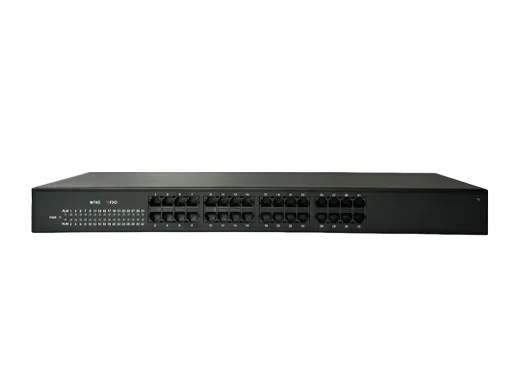
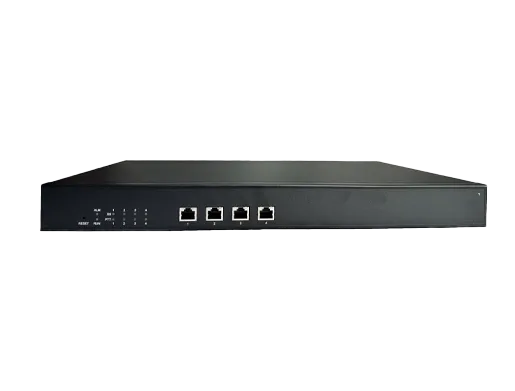
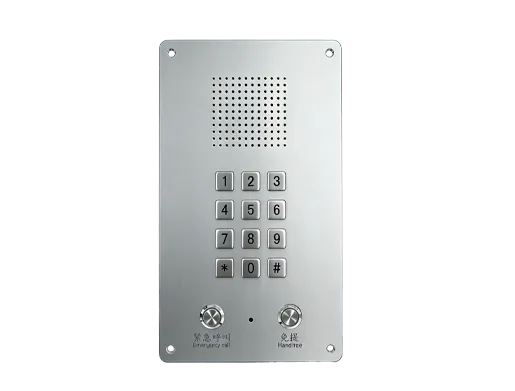
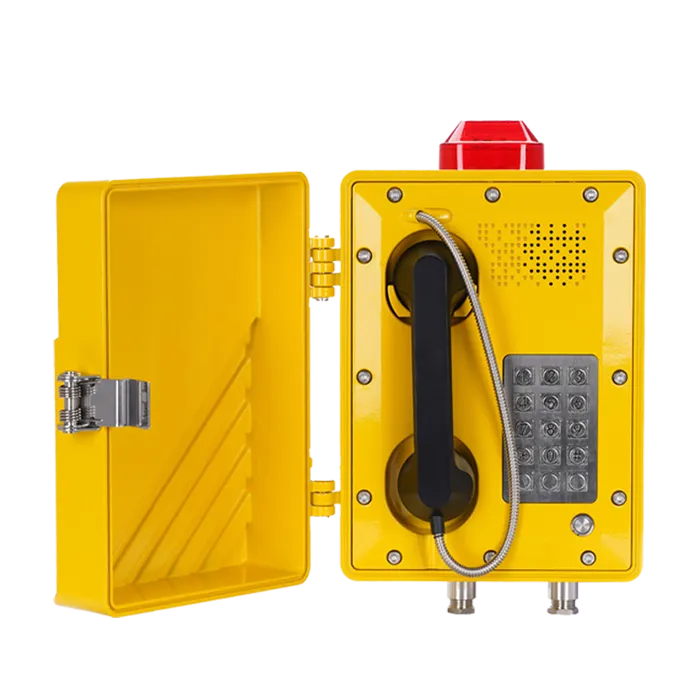
The RJ45 connector is one of the most widely used interfaces in modern communication and networking systems. It is commonly seen on Ethernet cables, network switches, routers, IP phones, computers, cameras, wireless access points, and many other connected devices. In both commercial and industrial environments, RJ45 has become a basic building block for reliable wired data transmission.
Its popularity comes from a practical combination of standardization, ease of use, stable physical connection, and support for high-speed network communication. Whether the goal is to connect office devices, build structured cabling in a campus, deploy industrial network equipment, or link voice and data terminals in a control room, RJ45 remains one of the most familiar and important connector types in the network world.
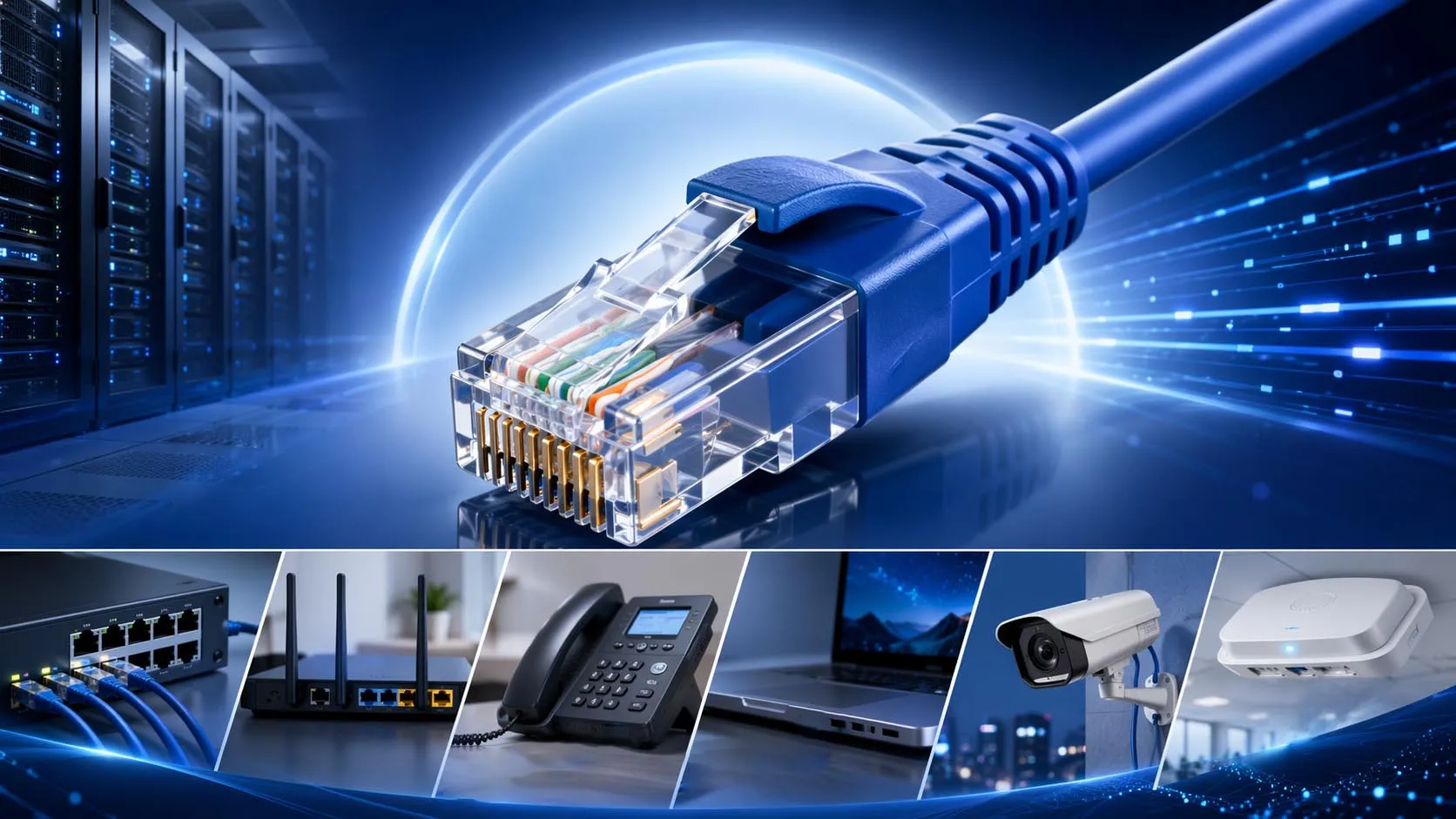
RJ45 connectors are the standard interface for Ethernet cabling in modern wired networks.
What Is an RJ45 Connector?
An RJ45 connector is a modular connector commonly used for Ethernet networking. It is designed to terminate twisted-pair copper network cables and connect them to devices such as switches, routers, computers, IP phones, and other network-enabled equipment. In daily usage, people often refer to it simply as a network connector or Ethernet plug.
The term “RJ” comes from “Registered Jack,” while “RJ45” has become the widely accepted common name for the 8-position modular connector used in Ethernet cabling. In practical networking language, RJ45 usually refers to the familiar 8P8C connector format, meaning it has eight positions and eight contacts.
Because it supports structured cabling and standardized Ethernet connectivity, RJ45 is a critical interface for local area networks. It is used in everything from small office installations to data centers, transport systems, manufacturing sites, and security infrastructure.
RJ45 is best understood as the standard modular connector used to terminate and connect copper Ethernet cables in wired IP networks.
Basic Structure of an RJ45 Connector
Eight-position modular design
An RJ45 connector uses an eight-position body with eight metal contacts. This layout allows it to work with twisted-pair Ethernet cabling for network communication. Compared with smaller telephone connectors such as RJ11, RJ45 is physically wider and intended for data rather than traditional analog voice lines.
The standardized contact arrangement helps maintain compatibility across a wide range of network hardware. This is one reason RJ45 became such a universal interface for wired communications.
Plastic housing with locking tab
Like other modular connectors, RJ45 uses a plastic plug body with a spring-style locking tab. When inserted into a device port, the tab clicks into place and holds the connection securely. This provides a practical balance between quick installation and mechanical stability.
In network environments where cables may be moved, replaced, or patched frequently, this simple locking mechanism supports efficient maintenance and field work.
Termination to twisted-pair cable
RJ45 connectors are typically attached to twisted-pair copper cables such as Cat5e, Cat6, Cat6A, or higher categories, depending on network requirements. The internal conductors are arranged in a defined order so the connector can support Ethernet communication correctly.
Because signal integrity matters in data networks, correct cable termination, contact quality, and category matching all play an important role in overall performance.
Main Features of RJ45 Connector
Standard interface for Ethernet networking
The most important feature of RJ45 is that it serves as the standard connector for copper-based Ethernet networks. It is recognized globally and supported by a broad ecosystem of switches, routers, endpoints, and structured cabling components.
This standardization makes procurement, maintenance, expansion, and integration much easier. Devices from different vendors can connect within the same Ethernet framework as long as they follow the relevant network standards.
Supports reliable high-speed data transmission
RJ45 connectors are used in data networks that support far higher bandwidth than traditional telephone connectors. Depending on cable category, hardware quality, and link design, RJ45-based copper Ethernet connections can support common enterprise and industrial network speeds ranging from 10 Mbps and 100 Mbps to 1 Gbps, 2.5 Gbps, 5 Gbps, 10 Gbps, and in some cases beyond within specialized scenarios.
This makes RJ45 suitable for voice, video, control data, office traffic, security streams, and many everyday network services in a single infrastructure.
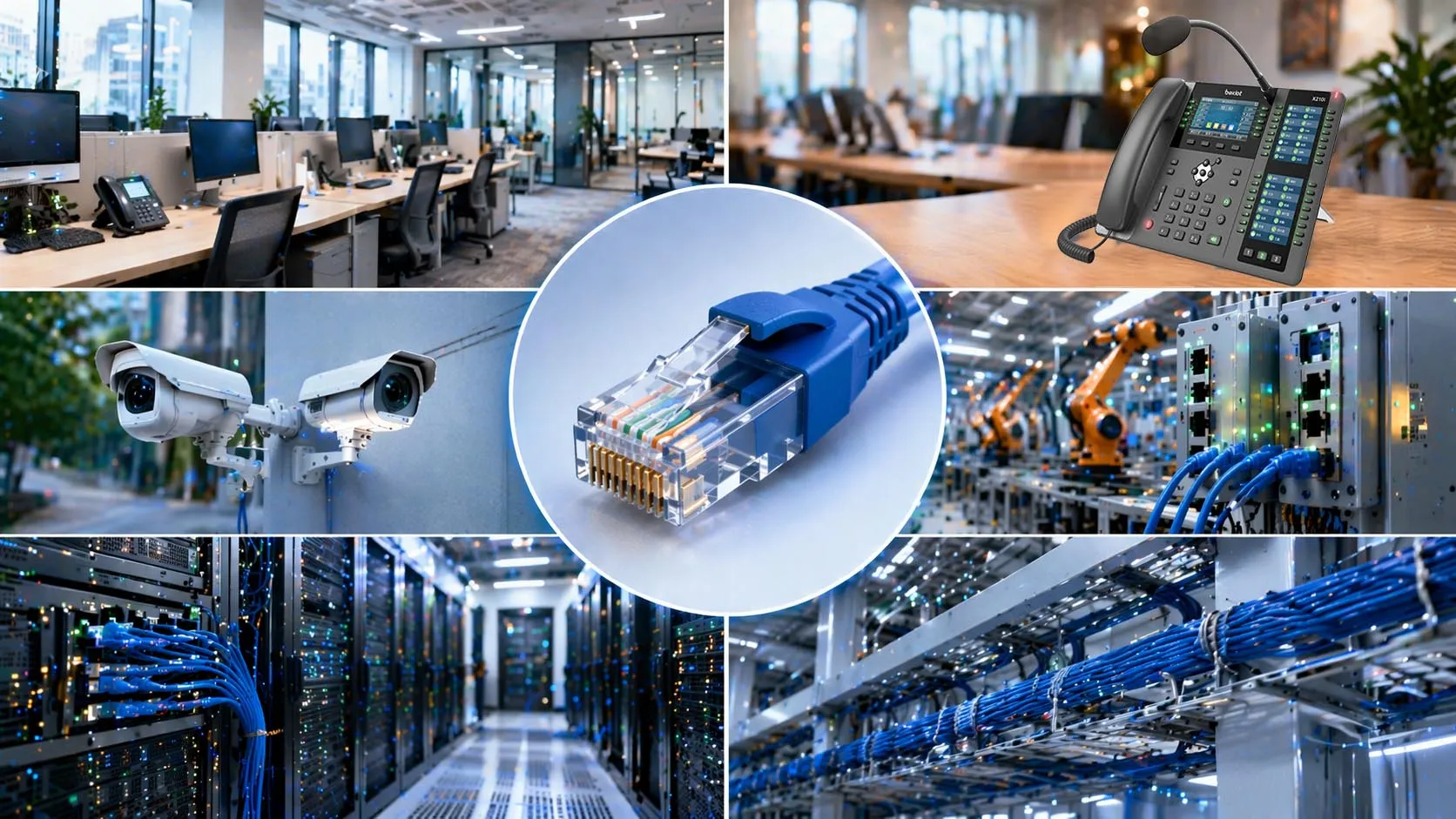
RJ45 is widely used to connect endpoints and network equipment in office, campus, and industrial environments.
Broad compatibility with network devices
RJ45 connectors appear on a very wide range of devices. Common examples include switches, routers, computers, IP phones, printers, network video recorders, cameras, industrial controllers, wireless access points, and gateways. This wide compatibility is one of the main reasons RJ45 has remained central to copper Ethernet deployment.
For system designers, the connector provides a practical and familiar interface across voice, data, security, and automation systems.
Supports Power over Ethernet deployment
Another major feature is compatibility with Power over Ethernet in many network applications. Through the same Ethernet cable terminated by RJ45 connectors, certain devices can receive both data and electrical power. This is especially valuable for IP phones, access control devices, intercom terminals, wireless access points, and IP cameras.
By reducing the need for separate local power wiring in many deployments, RJ45-based PoE connections help simplify installation and improve site flexibility.
Convenient for patching and maintenance
RJ45 connectors are easy to use in patch panels, patch cords, wall outlets, device ports, and equipment cabinets. This makes them very suitable for structured cabling systems, where organized patching and quick service replacement are important.
In everyday network operations, damaged patch cords or moved endpoints can usually be handled quickly without major rewiring, which helps reduce service disruption.
How RJ45 Wiring Is Commonly Used
Structured cabling in buildings
RJ45 is commonly used as the endpoint interface in structured cabling systems for offices, campuses, hospitals, hotels, factories, transport facilities, and control centers. Horizontal cabling typically terminates into wall outlets and patch panels, while patch cords with RJ45 connectors link user devices and switches.
This arrangement provides a clean, scalable, and standardized framework for network growth and maintenance.
Straight-through and crossover usage
Historically, RJ45 Ethernet cables could be wired as straight-through or crossover cables depending on the devices being connected. In many modern networks, however, auto MDI-X capabilities on switches and endpoints have reduced the importance of manual crossover planning in everyday installations.
Even so, understanding that pin order and termination standards matter remains useful, especially in troubleshooting and custom cable work.
Common termination standards
RJ45 connectors are usually terminated according to T568A or T568B wiring patterns. Both standards define the arrangement of the cable pairs inside the connector. The key point is consistency across both ends of the link, unless a specific cable type is intentionally required.
In most practical network deployments, technicians choose one standard for the site and follow it consistently to reduce confusion and installation errors.
RJ45 vs RJ11: What Is the Difference?
RJ45 and RJ11 are both modular connectors, but they serve very different purposes. RJ45 is mainly associated with Ethernet data networking, while RJ11 is mainly associated with telephone and analog voice lines. The difference affects physical size, number of contacts, signal type, and typical usage scenarios.
Understanding this difference is important in system design because modern sites may contain both connectors. For example, an IP phone may use RJ45 for its network uplink, while an analog gateway may use RJ11 for its telephone port.
| Item | RJ45 | RJ11 |
|---|
| Main use | Ethernet data networking | Telephone and analog voice line connection |
| Connector size | Larger modular connector | Smaller modular connector |
| Typical contacts | 8 contacts | Usually fewer contacts for voice lines |
| Typical devices | Switches, routers, IP phones, PCs, cameras | Telephones, fax machines, modems, analog gateways |
| Main role | Packet-based network communication | Analog voice and line signaling |
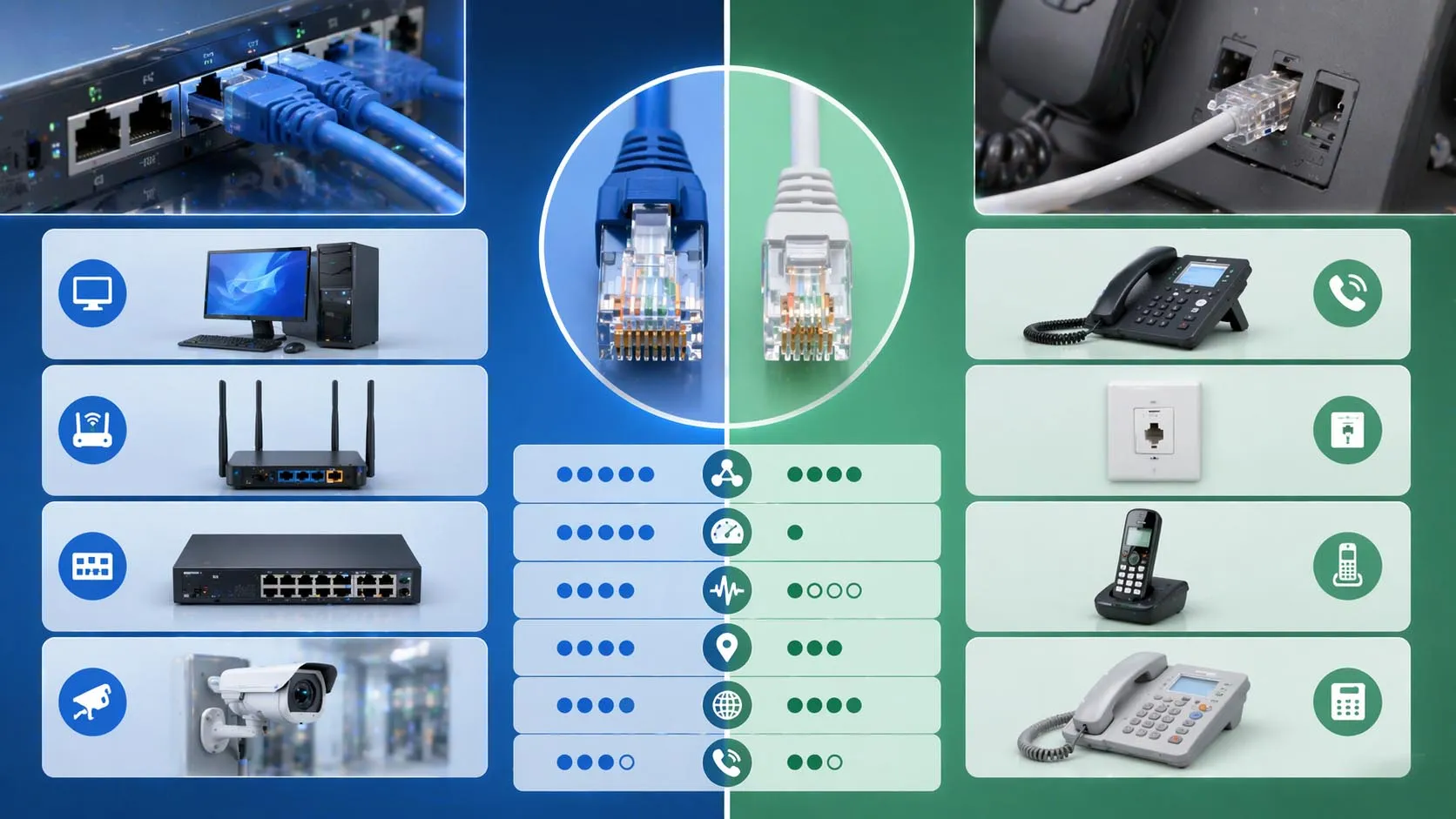
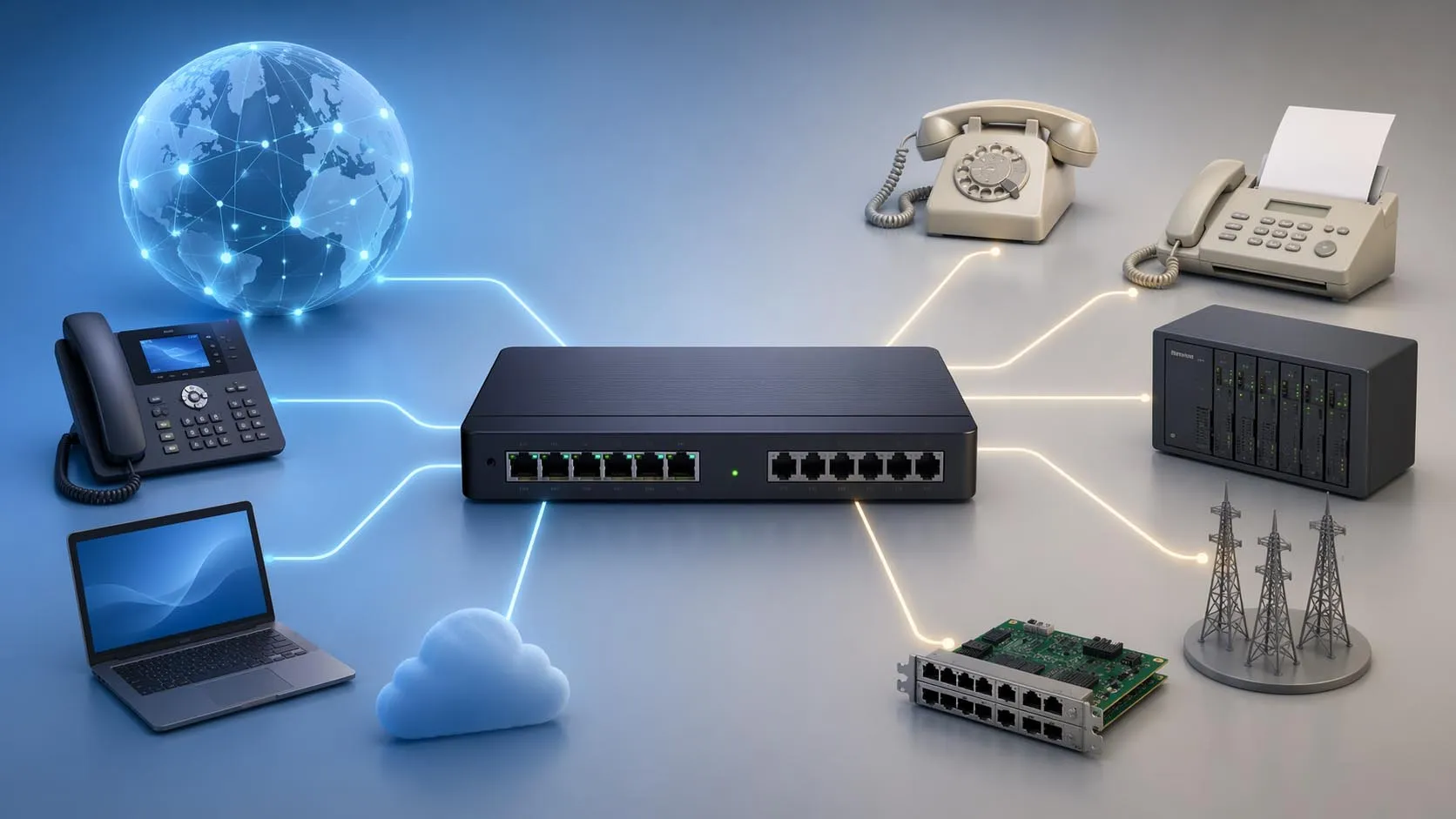
RJ45 is used for Ethernet and IP-based communication, while RJ11 is used mainly for traditional telephone and analog line connectivity.
Common Applications of RJ45 Connector
Office and enterprise networks
RJ45 is used throughout office environments to connect desktop computers, printers, IP phones, switches, and routers. It forms the physical layer foundation of everyday wired network access in corporate and institutional spaces.
Because it is standardized and easy to patch, it supports both new installations and ongoing network expansion.
IP phones and unified communications
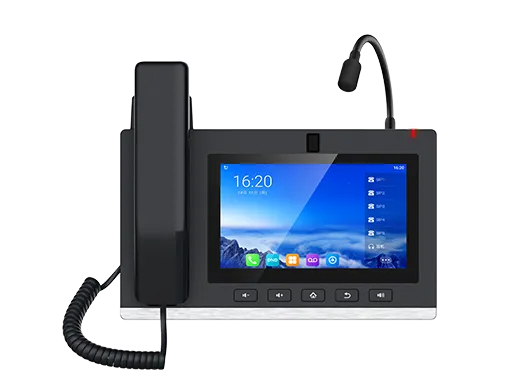
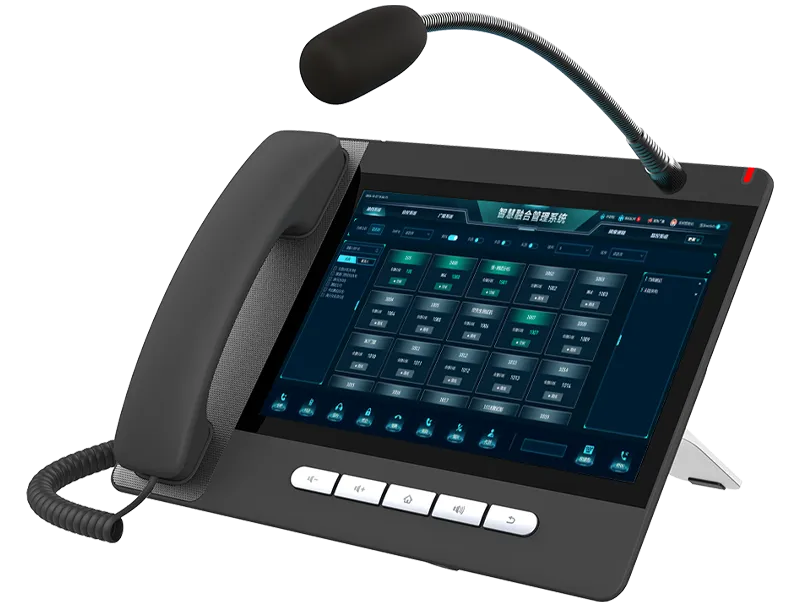
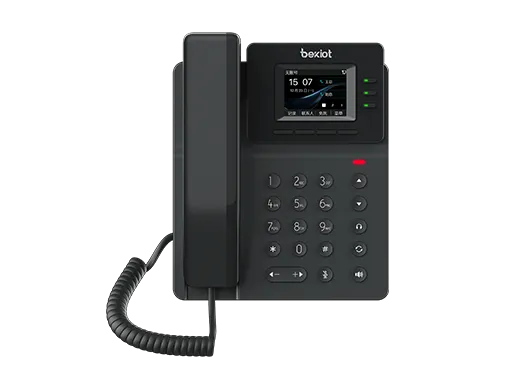
Most SIP phones and IP communication terminals use RJ45 Ethernet ports for network connectivity. In these deployments, the RJ45 connection allows devices to access the LAN, register to the IP PBX or SIP platform, and often receive power through PoE.
This makes RJ45 an essential connector in modern voice deployments where telephony is integrated into the overall IP infrastructure.
Security and surveillance systems
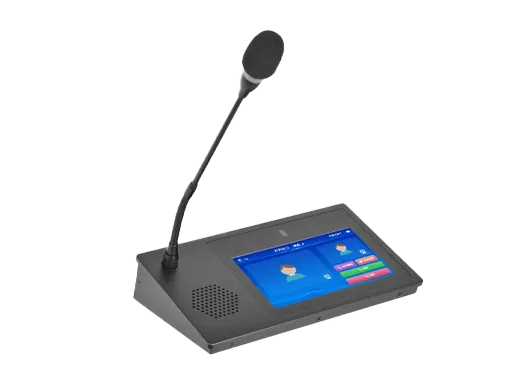
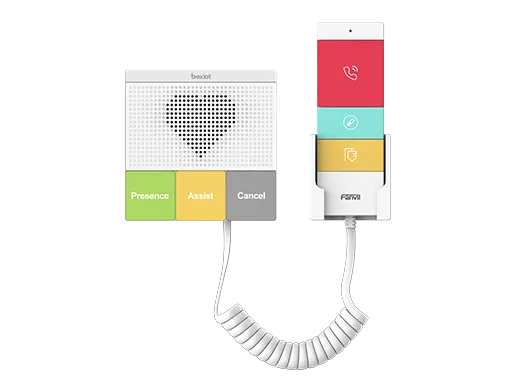
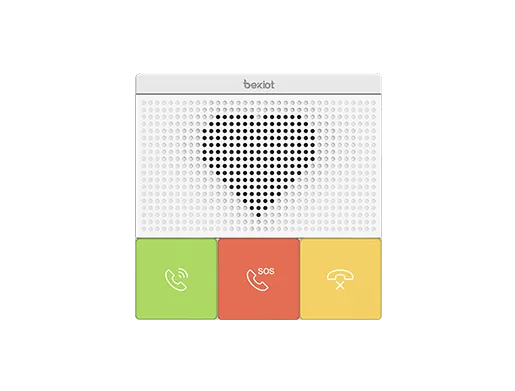
RJ45 is widely used in IP cameras, network video recorders, access control controllers, intercom stations, and related security devices. In many of these systems, one Ethernet connection can carry both data and power when PoE is supported.
This simplifies deployment across campuses, parking facilities, industrial plants, transport sites, and public buildings.
Industrial Ethernet and automation
In industrial environments, RJ45 is often used for industrial switches, HMIs, controllers, gateways, and communication equipment that rely on Ethernet-based networking. Although harsh environments may require ruggedized housings or protected interfaces, the core RJ45 format remains common in industrial communication design.
This makes it relevant not only in commercial LANs but also in manufacturing, utilities, transport control, and industrial monitoring systems.
Data rooms and patching systems
RJ45 connectors are also fundamental in racks, patch panels, network cabinets, and equipment rooms. They help organize structured network links clearly and efficiently, which is essential for troubleshooting, port management, and scalable infrastructure planning.
In well-designed systems, the physical clarity provided by RJ45-based patching supports both network reliability and long-term maintainability.
Advantages of Using RJ45
Widely standardized and easy to source
RJ45 connectors, cables, keystone jacks, patch panels, and tools are widely available around the world. This broad ecosystem reduces procurement difficulty and supports consistent implementation across projects of different sizes.
For contractors, integrators, and maintenance teams, this means fewer barriers to deployment and easier spare-parts planning.
Flexible for many networked systems
RJ45 is not limited to office IT. It can support communication networks, security systems, IP telephony, industrial automation, building systems, and edge device connectivity. That flexibility makes it one of the most practical connector types in modern infrastructure.
In mixed-use projects, a common connector standard can also simplify training and field support.
Supports scalable IP infrastructure
Because RJ45 is tied to Ethernet networking, it fits naturally into scalable IP architecture. Organizations can start small and expand over time while keeping a consistent physical interface for many different devices and services.
This helps make network growth more orderly, modular, and cost-effective.
Limitations of RJ45
Performance depends on cable quality and installation
Although RJ45 supports high-speed networking, performance is not determined by the connector alone. Cable category, termination quality, pathway design, electromagnetic conditions, and link length all affect the final result.
Improper crimping, poor shielding practices, or mismatched components can reduce performance and create network problems.
Not ideal for every harsh environment without protection
Standard RJ45 connectors are widely used indoors, but harsh industrial, marine, dusty, wet, or vibration-heavy environments may require specialized protective housings, sealed connectors, or industrial-rated assemblies.
In those cases, RJ45 may still be part of the system, but it often needs additional protection to meet reliability expectations.
Conclusion
The RJ45 connector is the standard modular interface for copper Ethernet networking and one of the most important physical components in modern wired communication systems. Its eight-contact design, broad compatibility, support for high-speed data transmission, and suitability for structured cabling have made it essential across offices, campuses, industrial sites, control rooms, and security networks.
From computers and switches to IP phones, cameras, and PoE-powered edge devices, RJ45 provides a familiar and dependable connection method that supports scalable IP infrastructure. For anyone involved in networking, communication systems, or integrated building technology, understanding RJ45 is fundamental to correct installation planning and system design.
In short, RJ45 is far more than just a network plug. It is a core interface that helps connect modern digital communication environments in a practical, standardized, and efficient way.
FAQ
What is an RJ45 connector used for?
RJ45 connectors are mainly used for Ethernet networking. They connect twisted-pair copper cables to devices such as switches, routers, computers, IP phones, cameras, and other network equipment.
Is RJ45 the same as Ethernet?
Not exactly. Ethernet is the networking technology, while RJ45 is the common connector format used on many copper Ethernet cables and ports.
Can RJ45 carry power as well as data?
Yes, in many applications RJ45 connections can support Power over Ethernet, allowing compatible devices to receive both network data and electrical power through the same cable.
What is the difference between RJ45 and RJ11?
RJ45 is mainly used for Ethernet data networking, while RJ11 is mainly used for telephone and analog voice lines. RJ45 is larger and has more contacts.
What devices commonly use RJ45?
Common devices include computers, switches, routers, IP phones, IP cameras, wireless access points, printers, industrial gateways, and network video equipment.
Is RJ45 still widely used today?
Yes. RJ45 remains one of the most widely used connectors in wired networks and continues to be important in enterprise, industrial, security, and communication system deployments.