The Becke IPGA-1E1 Trunk Gateway is built for organizations that need stable digital trunk connectivity between traditional telecom networks and modern IP voice platforms. Designed for enterprise telephony, IP PBX interconnection, and distributed communication environments, it provides a practical way to connect E1 trunk resources into SIP-based systems while maintaining reliable performance, flexible call control, and easy deployment. For businesses looking to modernize their communication architecture without abandoning working carrier-side trunk resources, the IPGA-1E1 offers a straightforward and dependable interconnection solution.
In enterprise communication projects, many networks still rely on a combination of conventional telecom trunks and newer IP-based platforms. The IPGA-1E1 is designed for exactly this kind of mixed environment. It enables organizations to bridge E1 connectivity with SIP voice infrastructure in a more structured way, helping reduce deployment friction while supporting a cleaner and more future-ready voice network architecture.
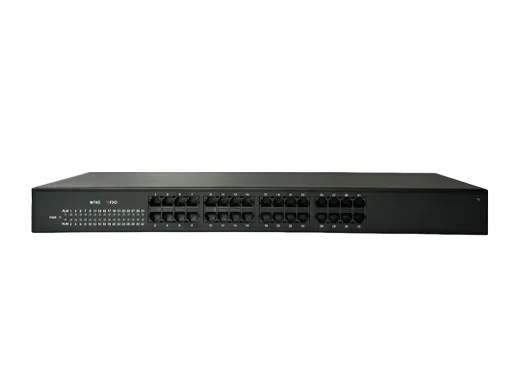
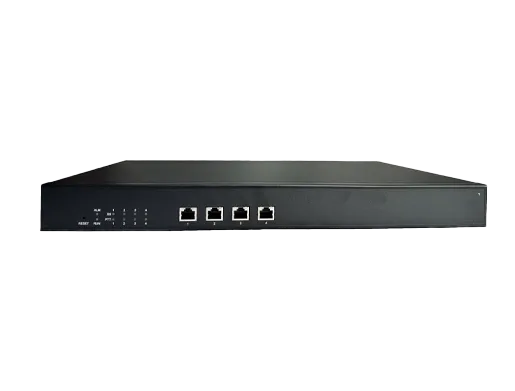
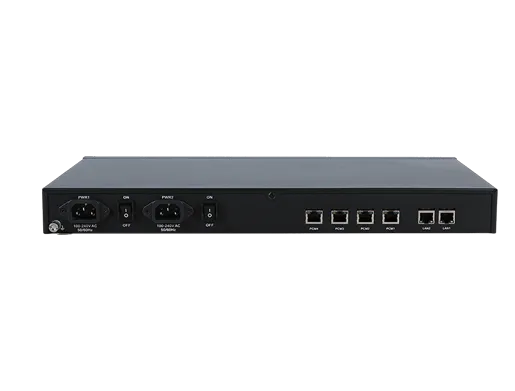
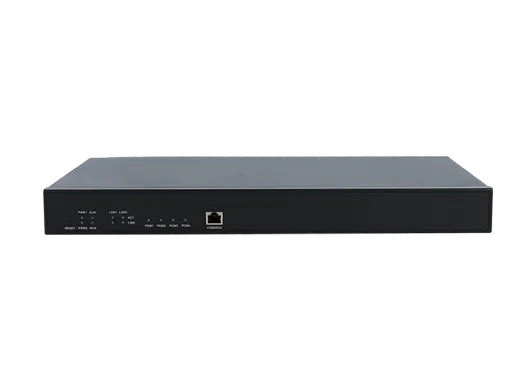
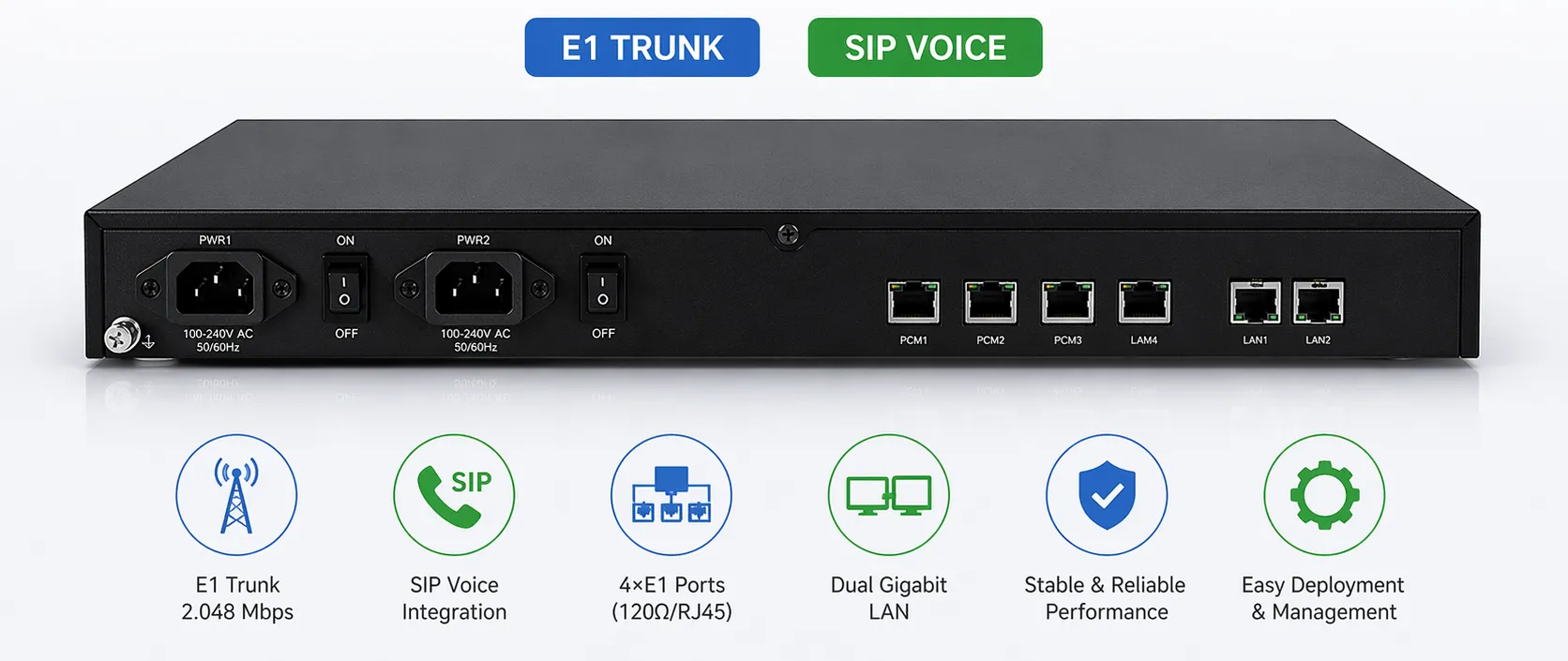
IPGA-1E1 Trunk Gateway built for E1 trunk access in enterprise SIP voice networks.
Built for Enterprise-Grade Deployment
E1 trunk access for enterprise voice interconnection
The IPGA-1E1 is positioned for environments that require dependable E1 digital trunk connectivity in a compact and deployment-friendly format. It is a strong fit for organizations that need to connect carrier trunks, legacy switching resources, or digital voice lines into an IP-based communication platform without unnecessary complexity. This makes it especially useful in projects where reliability and compatibility matter more than overly complicated system design.
For many enterprise buyers, a single-E1 gateway remains an ideal choice when the deployment goal is to build a clean and efficient connection point between existing telecom services and a SIP-based business voice system. The IPGA-1E1 supports that requirement with a focused and practical product positioning.
Strong fit for IP PBX and business voice networks
This gateway is well suited for enterprise IP PBX deployments, large-capacity voice environments, and multi-branch communication projects. Its value is not only in trunk connectivity, but also in helping unify traditional voice access with SIP-based telephony infrastructure in a more manageable way. That makes it useful for organizations that want to streamline voice resources without fully replacing their established telecom access model.
In business communication systems, interoperability often matters just as much as capacity. The IPGA-1E1 helps connect these different communication layers, allowing enterprises to bring conventional E1 resources into a broader IP voice framework that is easier to maintain and expand over time.
Cost-effective and scalable deployment value
For organizations building or expanding business voice systems, the IPGA-1E1 offers a practical balance of reliability, routing flexibility, and manageable deployment. It supports long-term migration from traditional voice networks toward more centralized and SIP-based communication architectures, making it a useful choice for projects that need both present-day compatibility and room for future system development.
Instead of forcing a disruptive infrastructure change, the gateway supports a more gradual upgrade path. This makes it appealing to companies that want to improve communication capability step by step while preserving current investment in digital trunk resources.
A good trunk gateway should do more than pass calls between two networks. It should help organizations build a more flexible, stable, and easier-to-manage voice environment.
Functional Capabilities
Flexible routing and number manipulation
The gateway supports PSTN-to-IP and IP-to-PSTN call handling with routing and number transformation. Users can configure routing paths and adjust numbers by deleting digits, adding prefixes, or adding suffixes. This makes the device useful in real deployment scenarios where call control, numbering plans, and trunk policies must align with business requirements rather than follow a fixed and limited setup model.
In practical enterprise use, numbering consistency and routing logic are essential for smooth operations. The IPGA-1E1 helps organizations create more suitable call flows across departments, branches, carriers, and SIP platforms, which improves deployment flexibility in live business environments.
Protocol and signaling compatibility
The IPGA-1E1 supports SIP V1.0 and V2.0 based on RFC3261, along with digital trunk signaling options including SS7-related protocols, ISDN user-side and network-side modes, and SS1 signaling support. This broad protocol capability helps the gateway fit into mixed telecom and IP communication environments with greater flexibility.
This is particularly valuable in projects where enterprises must interconnect with different operators, PBX platforms, or existing digital network structures. A broader signaling base helps reduce compatibility barriers and gives integrators more confidence during deployment planning and system expansion.
Voice quality and media handling
The platform supports multiple audio codecs including G.711A, G.711U, G.729, G.722, G.723, iLBC, AMR-NB, SILK, and OPUS. It also supports several DTMF modes and echo cancellation during calls, helping improve voice handling quality and interoperability across different communication systems. These voice capabilities make the gateway more adaptable to a wide range of business telephony scenarios.
In enterprise communication, consistent media performance can influence both user experience and system compatibility. By supporting common codecs and practical voice processing functions, the IPGA-1E1 helps maintain smoother communication across mixed IP and telecom environments.
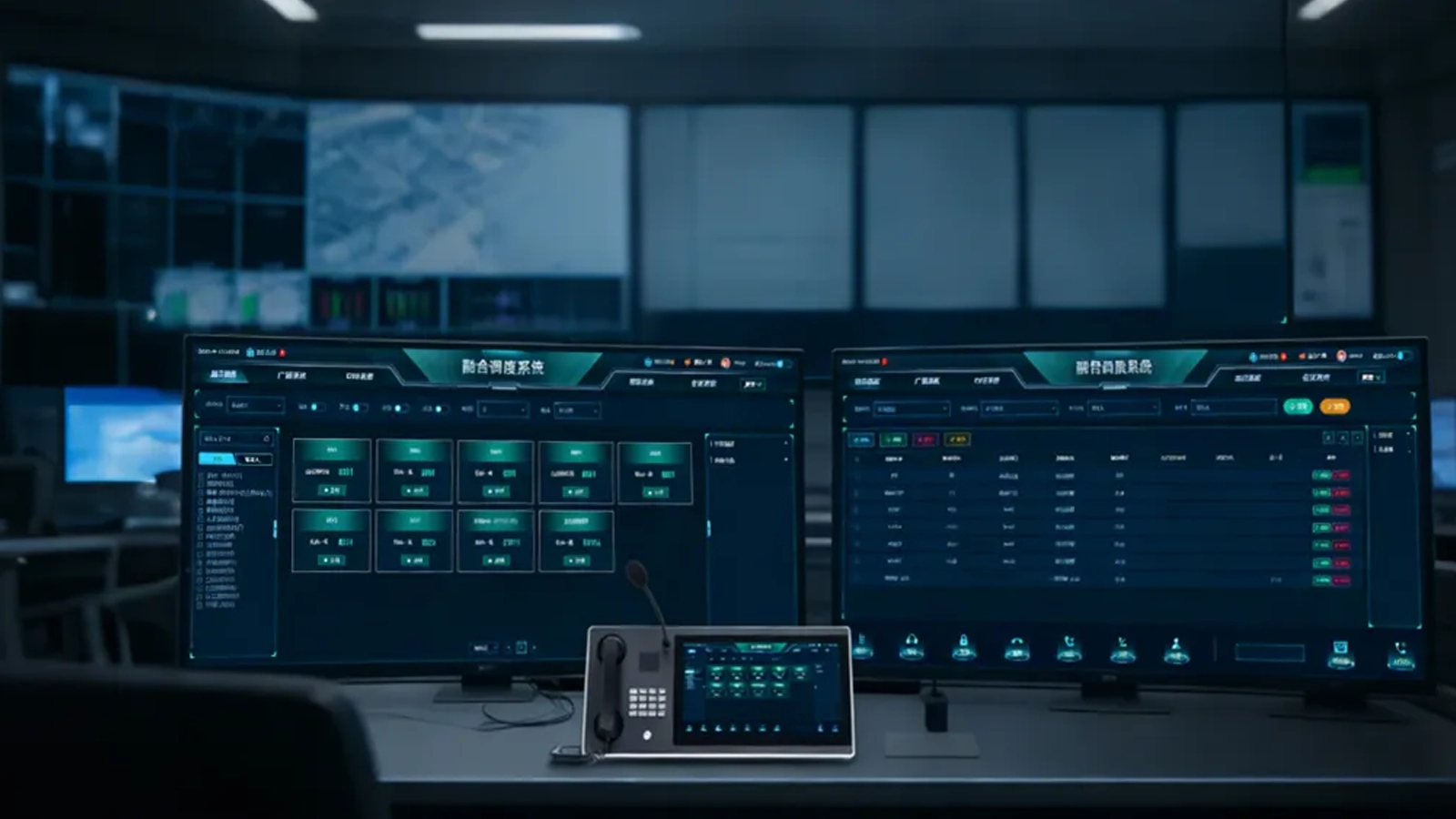
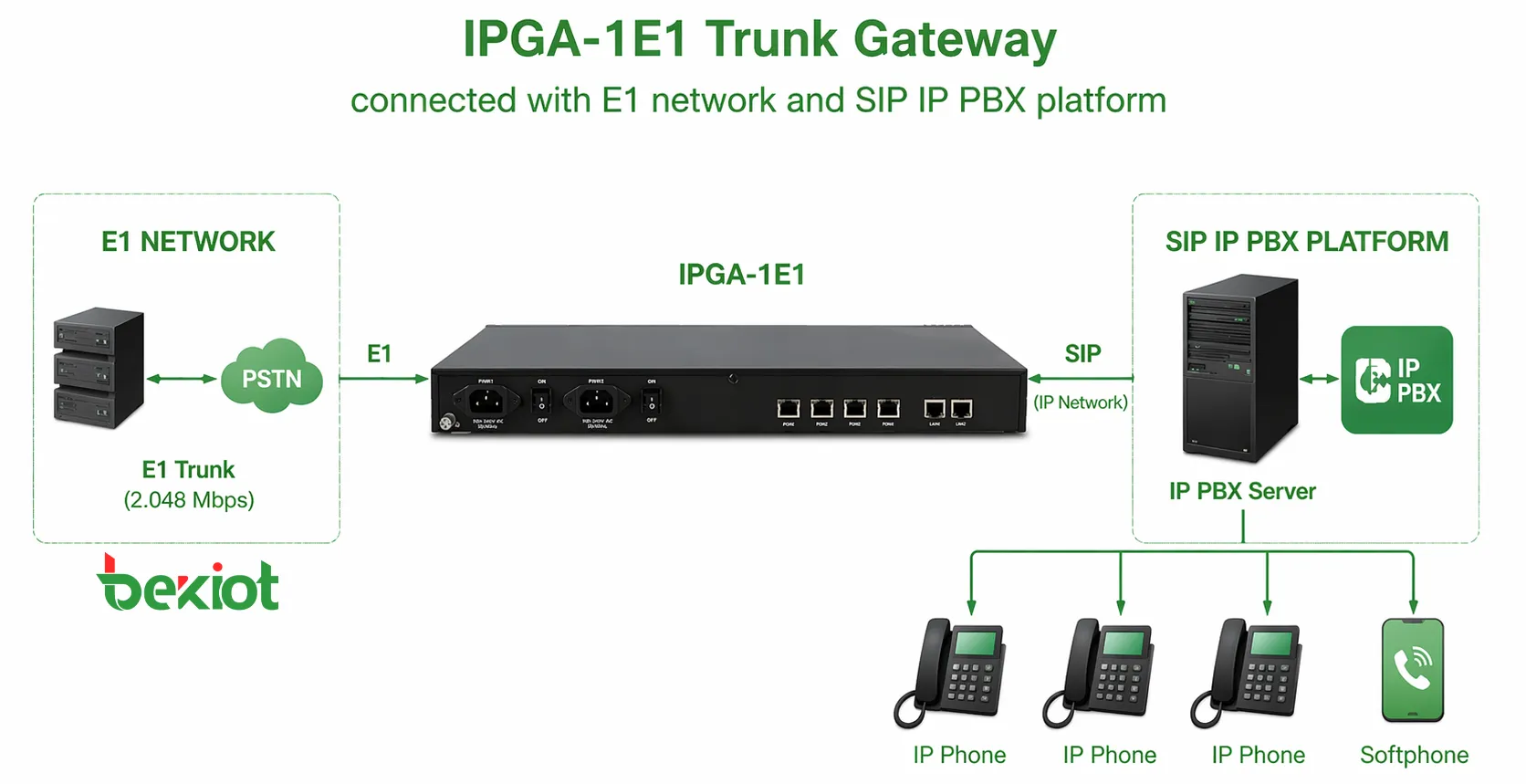
Designed for E1-to-SIP interconnection in enterprise telephony and IP PBX deployments.
Management and Deployment Advantages
Web-based management and maintenance
The gateway supports web-based configuration, software upgrade through the web interface, and diagnostic tools such as Ping and Tracert. This helps installers and IT teams reduce deployment complexity and handle routine management tasks more efficiently. For projects involving remote support, centralized maintenance, or ongoing configuration updates, this browser-based approach is especially practical.
A simpler management workflow can reduce installation time and lower the operational burden for service teams. For enterprise customers and system integrators, that creates real value throughout the lifecycle of the device, not only during the initial deployment phase.
Clear operational visibility
With Syslog support for error, warning, and information messages, the device provides better visibility into operating status and troubleshooting processes. This is useful for enterprise IT teams and service providers that need more structured maintenance and support workflows, especially when communication systems are expected to remain available for daily business use.
Better visibility also means faster troubleshooting and more efficient system support. In business voice networks, this can help reduce downtime risk and improve the overall manageability of the communication environment.
Stable hardware design for professional environments
The platform uses an embedded Linux system with a hardware architecture designed for stable operation in enterprise communication scenarios. Combined with standard rackmount deployment, it is suitable for customers that want a reliable and professional trunk gateway for long-term use. Its form factor and platform design make it well aligned with structured installation environments such as enterprise equipment rooms and communication cabinets.
This professional hardware positioning is important for buyers that view the gateway as part of a long-term system rather than a temporary conversion device. The IPGA-1E1 is intended to support continuous service in business-critical communication projects.
Application Scenarios
Enterprise IP PBX interconnection
The IPGA-1E1 is well positioned for organizations that need to connect E1 trunk resources to an IP PBX platform. It helps enterprises extend traditional telecom access into more flexible SIP-based call control environments. This supports a more unified communication structure while allowing E1 resources to remain useful within a modern voice architecture.
It is a suitable choice for companies that want to combine existing operator-side connectivity with centralized IP-based voice management, especially in office, commercial, and enterprise telephony deployments.
Large-capacity call center deployment
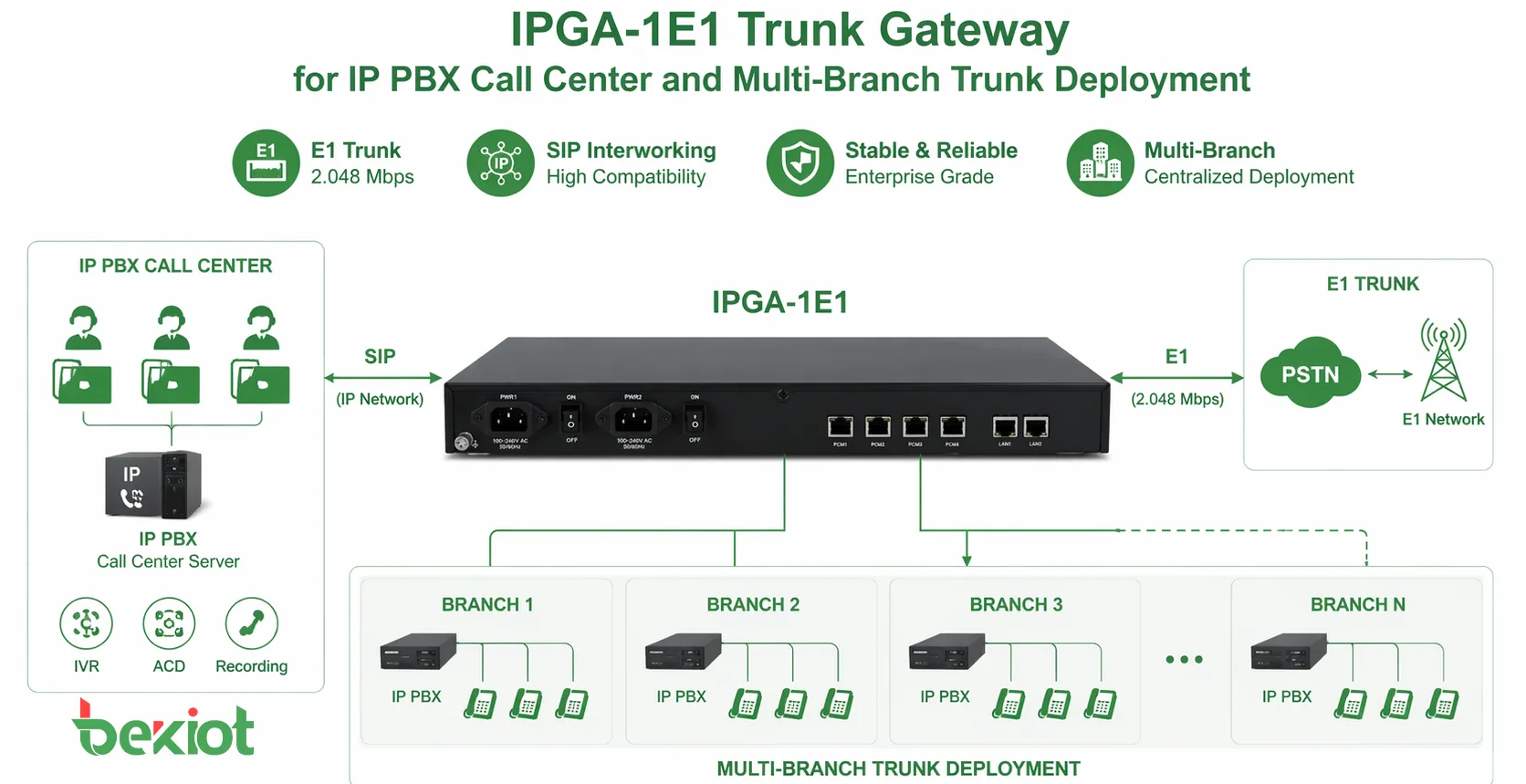
For contact center and heavy-traffic voice environments, the gateway provides dependable digital trunk connectivity and routing flexibility. This makes it a practical option for systems where stable inbound and outbound call handling is important. In these environments, reliable interconnection between telecom lines and IP PBX platforms directly supports customer communication efficiency.
Whether used in service hotlines, support centers, or enterprise call processing applications, the IPGA-1E1 helps create a stronger voice link between the telecom side and the internal IP communication platform.
Multi-branch communication networks
In multi-site organizations, the IPGA-1E1 can serve as a digital trunk interconnection device that links branch communication resources into a broader enterprise voice architecture. This improves consistency across locations while supporting more centralized voice management, routing policy alignment, and better overall communication coordination.
As organizations expand across multiple offices or service points, a gateway like the IPGA-1E1 can help simplify how traditional trunk resources are brought into the wider enterprise voice system.
Traditional-to-IP voice migration projects
The gateway is also a strong fit for migration scenarios where organizations want to preserve working trunk infrastructure while moving service logic and communications management toward SIP-based systems. This gives businesses a smoother transition path without forcing immediate replacement of every existing resource.
For buyers planning phased modernization, this deployment model is often more realistic and less disruptive. The IPGA-1E1 supports that strategy by allowing enterprises to modernize voice architecture while continuing to use established E1 connectivity.
Well suited for enterprise IP PBX, call center, and multi-branch E1 trunk integration projects.
Why Choose the Becke IPGA-1E1 Trunk Gateway
The Becke IPGA-1E1 stands out by combining E1 trunk access, SIP interoperability, number manipulation, flexible routing, broad codec support, web-based management, and enterprise-focused deployment value in one platform. For buyers looking for a practical trunk gateway for business voice interconnection, it offers a strong balance of stability, compatibility, and long-term system value.
It is especially suitable for enterprises that want a gateway with clear deployment purpose, manageable operation, and good adaptability across legacy and IP voice environments. From PBX interconnection to migration planning and distributed communication projects, the IPGA-1E1 provides a dependable building block for modern enterprise voice networks.
FAQ
What is the main value of the IPGA-1E1 Trunk Gateway?
Its main value is connecting E1 digital trunk resources to SIP-based communication systems in a way that supports reliable voice interconnection, flexible routing, easier deployment, and better integration with enterprise IP telephony platforms.
Who is this gateway best suited for?
It is well suited for enterprise IP PBX deployments, call centers, multi-branch organizations, and voice migration projects that need digital trunk connectivity.
Can the IPGA-1E1 work with SIP platforms?
Yes. It supports SIP V1.0 and V2.0 based on RFC3261, making it suitable for SIP-based IP telephony environments and enterprise communication systems.
Does it support routing and number manipulation?
Yes. The gateway supports call routing between PSTN and IP networks, along with number transformation features such as digit deletion and prefix or suffix addition.
What signaling types does it support?
It supports digital signaling options including SS7-related protocols, ISDN user-side and network-side modes, and SS1 signaling support.
Is it easy to deploy and manage?
Yes. The device supports web-based configuration, software upgrades through the web interface, and diagnostic tools such as Ping and Tracert, making deployment and daily maintenance more convenient.
What voice capabilities make it suitable for enterprise use?
Its support for multiple codecs, DTMF handling methods, and echo cancellation helps it fit into enterprise voice environments that require compatibility, interoperability, and reliable call quality.
Why choose the IPGA-1E1 for migration projects?
Because it helps organizations preserve existing E1 trunk resources while introducing SIP-based voice control and more modern communication architecture, making transition projects more practical, more controlled, and less disruptive.
We use cookie to improve your online experience. By continuing to browse this website, you agree to our use of cookie.
Cookies
This Cookie Policy explains how we use cookies and similar technologies when you access or use our website and related services. Please read this Policy together with our Terms and Conditions and Privacy Policy so that you understand how we collect, use, and protect information.
By continuing to access or use our Services, you acknowledge that cookies and similar technologies may be used as described in this Policy, subject to applicable law and your available choices.
Updates to This Cookie Policy
We may revise this Cookie Policy from time to time to reflect changes in legal requirements, technology, or our business practices. When we make updates, the revised version will be posted on this page and will become effective from the date of publication unless otherwise required by law.
Where required, we will provide additional notice or request your consent before applying material changes that affect your rights or choices.
What Are Cookies?
Cookies are small text files placed on your device when you visit a website or interact with certain online content. They help websites recognize your browser or device, remember your preferences, support essential functionality, and improve the overall user experience.
In this Cookie Policy, the term “cookies” also includes similar technologies such as pixels, tags, web beacons, and other tracking tools that perform comparable functions.
Why We Use Cookies
We use cookies to help our website function properly, remember user preferences, enhance website performance, understand how visitors interact with our pages, and support security, analytics, and marketing activities where permitted by law.
We use cookies to keep our website functional, secure, efficient, and more relevant to your browsing experience.
Categories of Cookies We Use
Strictly Necessary Cookies
These cookies are essential for the operation of the website and cannot be disabled in our systems where they are required to provide the service you request. They are typically set in response to actions such as setting privacy preferences, signing in, or submitting forms.
Without these cookies, certain parts of the website may not function correctly.
Functional Cookies
Functional cookies enable enhanced features and personalization, such as remembering your preferences, language settings, or previously selected options. These cookies may be set by us or by third-party providers whose services are integrated into our website.
If you disable these cookies, some services or features may not work as intended.
Performance and Analytics Cookies
These cookies help us understand how visitors use our website by collecting information such as traffic sources, page visits, navigation behavior, and general interaction patterns. In many cases, this information is aggregated and does not directly identify individual users.
We use this information to improve website performance, usability, and content relevance.
Targeting and Advertising Cookies
These cookies may be placed by our advertising or marketing partners to help deliver more relevant ads and measure the effectiveness of campaigns. They may use information about your browsing activity across different websites and services to build a profile of your interests.
These cookies generally do not store directly identifying personal information, but they may identify your browser or device.
First-Party and Third-Party Cookies
Some cookies are set directly by our website and are referred to as first-party cookies. Other cookies are set by third-party services, such as analytics providers, embedded content providers, or advertising partners, and are referred to as third-party cookies.
Third-party providers may use their own cookies in accordance with their own privacy and cookie policies.
Information Collected Through Cookies
Depending on the type of cookie used, the information collected may include browser type, device type, IP address, referring website, pages viewed, time spent on pages, clickstream behavior, and general usage patterns.
This information helps us maintain the website, improve performance, enhance security, and provide a better user experience.
Your Cookie Choices
You can control or disable cookies through your browser settings and, where available, through our cookie consent or preference management tools. Depending on your location, you may also have the right to accept or reject certain categories of cookies, especially those used for analytics, personalization, or advertising purposes.
Please note that blocking or deleting certain cookies may affect the availability, functionality, or performance of some parts of the website.
Restricting cookies may limit certain features and reduce the quality of your experience on the website.
Cookies in Mobile Applications
Where our mobile applications use cookie-like technologies, they are generally limited to those required for core functionality, security, and service delivery. Disabling these essential technologies may affect the normal operation of the application.
We do not use essential mobile application cookies to store unnecessary personal information.
How to Manage Cookies
Most web browsers allow you to manage cookies through browser settings. You can usually choose to block, delete, or receive alerts before cookies are stored. Because browser controls vary, please refer to your browser provider’s support documentation for details on how to manage cookie settings.
Contact Us
If you have any questions about this Cookie Policy or our use of cookies and similar technologies, please contact us at support@becke.cc .