RFC 2833 DTMF is one of the most widely used methods for transmitting keypad digits in VoIP and SIP communication systems. In practical terms, it allows a device to send DTMF events such as 0–9, *, and # in a way that is more reliable than simply embedding the tones inside the audio stream. This matters in real deployments because many telephony services depend on DTMF for user interaction, including IVR navigation, voicemail access, PIN entry, remote control commands, conference bridges, call center menus, and automated service platforms.
Although people still commonly say “RFC2833 DTMF,” the more current technical reference is RFC 4733, which obsoleted RFC 2833 while preserving the same general approach of carrying telephone events in RTP packets. Even so, the older term remains deeply embedded in vendor documentation, PBX settings, SIP trunk parameters, and day-to-day telephony language. That is why engineers, integrators, and telecom buyers still frequently see “RFC2833” in product menus and deployment guides.
For modern IP telephony systems, this method is important because it helps separate DTMF signaling from compressed speech audio. That separation reduces the risk that codecs, packetized voice processing, or transcoding will damage or misinterpret keypad tones. In other words, RFC 2833 style DTMF handling is popular not because it sounds different, but because it is often more dependable for machines that need to recognize digits correctly.
RFC 2833 DTMF is widely used in VoIP systems to send keypad events more reliably than ordinary in-audio tones.
What Is RFC 2833 DTMF?
Basic definition
RFC 2833 DTMF refers to a method of transporting Dual-Tone Multi-Frequency signaling as RTP telephone events rather than relying only on audible tones carried inside the main voice stream. In everyday deployment language, this is often described as an out-of-band DTMF method, meaning the digits are conveyed separately from the compressed voice audio even though they still travel within the broader real-time media environment.
This approach is especially useful in SIP and VoIP systems because the receiving endpoint does not have to recover the tone by listening to the speech path alone. Instead, it can interpret the event information sent for the digit. That makes keypad signaling more predictable across codecs, gateways, PBXs, SIP trunks, and other IP voice elements.
Why the name RFC2833 is still used
Even though RFC 4733 formally replaced RFC 2833, many products, integrators, and support teams continue to use “RFC2833” as shorthand. This is similar to how older terminology often survives in telecom systems long after a newer formal standard number exists. As a result, an IP phone, voice gateway, SBC, or PBX may offer a setting called RFC2833 even when its implementation behavior aligns with later telephone-event practice.
For practical writing and SEO, it is often useful to acknowledge both terms: RFC 2833 because that is the search phrase many users still type, and RFC 4733 because that is the more current technical reference point.
In real-world VoIP language, “RFC2833 DTMF” usually means RTP telephone-event signaling for keypad digits, even though RFC 4733 is the formal successor to RFC 2833.
How RFC 2833 DTMF Works
Digits are represented as telephone events
When a user presses a key on an IP phone, softphone, gateway-connected analog phone, or other telephony endpoint, the system does not necessarily send the actual dual-tone sound inside the speech payload. Instead, it can generate a telephone-event indication that represents the pressed digit and send that event in RTP packets. The far end interprets the event and understands which key was pressed.
This distinction is the core of the RFC 2833 method. The receiving device is not required to detect the DTMF tone waveform purely from compressed speech audio. It can process an explicit event instead, which is usually more robust in packet voice networks.
Separate from the encoded voice stream
In typical SIP usage, RFC 2833 style DTMF is negotiated as a telephone-event RTP format during call setup. Voice audio may use codecs such as G.711, G.729, G.722, or others, while DTMF events are conveyed separately as negotiated RTP payloads associated with telephone-event handling. This is why the method is often considered superior to pure in-band DTMF in many compressed or transcoded voice environments.
The practical advantage is that the keypad information is no longer dependent on the voice codec preserving exact DTMF tone characteristics. The system transmits the digit event itself rather than hoping the tone remains perfectly recognizable after compression, jitter buffering, transcoding, silence handling, or other media processing steps.
Negotiated during session setup
In SIP environments, support for this method is typically described during session negotiation. Endpoints and servers indicate that they can exchange telephone-event data, often using SDP attributes that define payload type and supported event ranges. If both sides agree, DTMF can be sent using the negotiated telephone-event method instead of being left fully inside the audio path.
This means DTMF reliability depends not only on the endpoint itself, but also on correct interworking among phones, gateways, PBXs, SBCs, trunks, and service providers. Misconfiguration on one side can still lead to missing or duplicated digits even when RFC 2833 mode is selected.
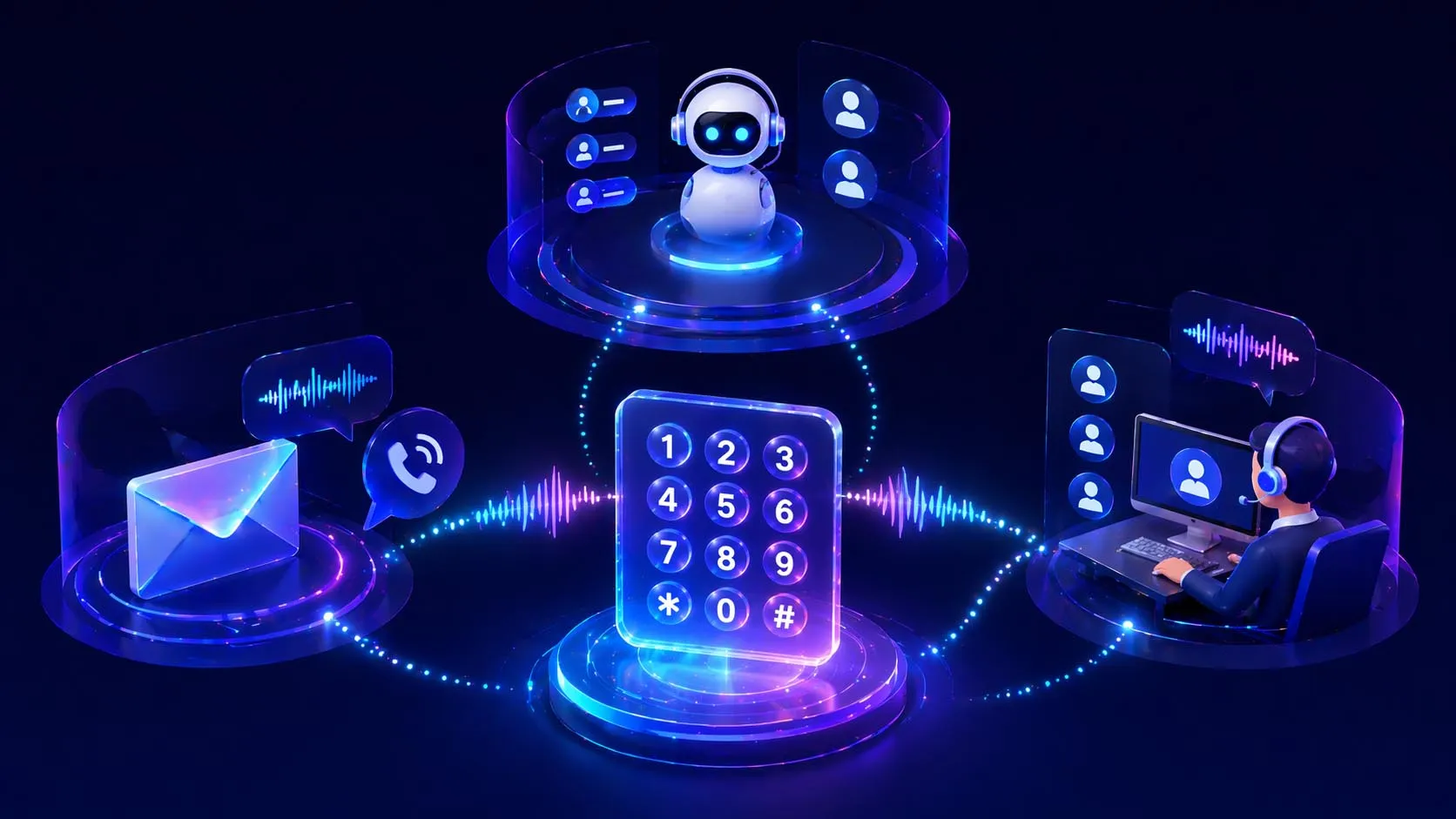
RFC 2833 style signaling allows keypad events to be transported separately from the compressed voice path.
Audio Benefits of RFC 2833 DTMF
Better reliability with compressed codecs
One of the main reasons RFC 2833 became popular is that in-band DTMF tones can be distorted by compressed codecs or altered by network media processing. Some codecs are optimized for human speech rather than for preserving exact signaling tones. When that happens, IVR systems or voicemail servers may fail to recognize the digit correctly, or they may recognize the wrong digit.
By sending the event separately, RFC 2833 reduces dependence on the audio path preserving the original tone structure perfectly. This makes it especially attractive in systems using compressed codecs, transcoding, or bandwidth-sensitive voice trunks.
Cleaner machine recognition
Another benefit is more consistent machine recognition. IVR systems, payment systems, access menus, and automation services are generally more interested in the intended digit than in the sound of the tone itself. RFC 2833 style transport helps deliver that intent more directly, which often results in better accuracy under real network conditions.
In operational terms, that means fewer repeated key presses, fewer failed menu selections, and less user frustration during automated call flows.
Less vulnerable to voice path processing
Modern VoIP streams may go through echo control, packet loss concealment, jitter buffers, transcoding, silence handling, or wideband-to-narrowband conversion. These processes are designed to improve conversational audio, but they can interfere with in-band DTMF if the system relies on the audio waveform alone. By contrast, telephone-event signaling is generally more resilient because it is not simply another sound inside the voice path.
This is one of the reasons RFC 2833 remains the default or preferred DTMF option in many SIP deployments, even when other methods are still available.
The biggest audio benefit of RFC 2833 DTMF is not better sound quality for the caller. It is better signaling reliability for the equipment that must recognize the pressed digit correctly.
Technical Features of RFC 2833 DTMF
RTP-based event transport
A core technical feature is that DTMF information is transported using RTP telephone events. This allows the signaling to stay close to the media plane rather than moving entirely into separate SIP messaging. As a result, it fits naturally into real-time voice sessions and is widely supported by IP phones, gateways, PBXs, SBCs, and media servers.
Because it is part of the media handling model, it can work efficiently across systems that already manage RTP streams for voice communication.
Telephone-event negotiation in SDP
Another important feature is SDP-based negotiation. During call setup, systems can advertise and agree on telephone-event support. This gives both sides a standard way to indicate that DTMF events should be handled through RTP event signaling instead of relying only on audible tones in the codec stream.
In operational practice, successful negotiation helps prevent ambiguity. If one side expects RFC 2833 style events and the other side sends only in-band tones or SIP INFO messages, DTMF failures can occur even when voice audio itself seems normal.
Works well in gateway environments
RFC 2833 is especially useful in analog-to-IP or TDM-to-IP gateway scenarios. A gateway can detect DTMF coming from a traditional line or device and then generate telephone events toward the IP side. This helps preserve service compatibility when older telephony equipment must interoperate with modern SIP infrastructure.
That is why gateways, ATAs, media gateways, and SBCs often include DTMF interworking settings that convert between in-band tones, RFC2833-style events, and SIP INFO depending on the far-end requirement.
Supports more than just keypad digits
Historically, RFC 2833 and its successor framework were not limited only to the basic keypad digits. The RTP payload concept also covers telephony events and related signaling cases beyond simple number entry. In many product discussions, however, the term is used mainly to refer to ordinary DTMF digit transport because that is the most visible day-to-day use case in voice applications.
For most buyers and operators, the important practical point is that the method is built for machine-readable telephony events, not just for passing human-audible tones through the call.
RFC 2833 vs In-Band DTMF vs SIP INFO
In VoIP systems, DTMF can be transported in several ways, and each method has its own strengths and limitations. In-band DTMF sends the audible tones inside the voice stream. RFC 2833 sends telephone events through RTP as a separate signaling format tied to the media session. SIP INFO sends DTMF information using SIP signaling messages rather than RTP media packets. Understanding the difference is important because interoperability problems often come from mismatched DTMF methods rather than from the voice call itself.
| Method | How digits are sent | Main strength | Main limitation |
|---|
| In-band | Audible tones inside the voice codec stream | Simple in some pure audio paths | Can fail with compression, transcoding, or media processing |
| RFC 2833 / RFC 4733 | Telephone-event RTP packets associated with the media session | Widely supported and reliable in VoIP deployments | Requires proper negotiation and interworking |
| SIP INFO | Digits sent in SIP signaling messages | Independent of the audio stream | Not always preferred or supported end-to-end across trunks |
In many deployments, RFC 2833 becomes the preferred balance because it is designed for machine recognition, stays close to the media path, and is broadly supported by VoIP equipment. However, it is not automatically correct in every scenario. The best choice depends on provider expectations, endpoint support, SBC behavior, PBX policy, and gateway interworking requirements.
Many DTMF problems are not caused by the digits themselves. They are caused by one side using one DTMF method while the other side expects a different one.
Where RFC 2833 DTMF Is Commonly Used
IVR and automated service menus
Interactive Voice Response systems are one of the most common use cases. Callers press digits to choose departments, enter account numbers, navigate menus, or trigger automated services. Because IVR accuracy is business-critical, many systems prefer RFC 2833 style transport over pure in-band tones, especially in SIP and provider-trunk environments.
This is particularly important where calls pass through multiple platforms or codec changes before reaching the IVR application.
Voicemail and unified messaging
Voicemail access often depends on DTMF for PIN entry, playback control, message management, and mailbox navigation. Missed or duplicated digits can quickly break the user experience. RFC 2833 helps improve consistency when the call traverses IP phones, gateways, PBXs, and voice servers before reaching the mailbox platform.
For enterprise users, this means fewer failed login attempts and smoother navigation through automated prompts.
Contact centers and customer service flows
Contact centers frequently rely on DTMF for queue navigation, self-service menus, call routing, identity entry, and integration with CRM or payment workflows. In these environments, DTMF reliability affects both customer experience and operational efficiency. RFC 2833 is therefore common in call center SIP trunking and media gateway deployments.
Where a single missed digit can send the caller to the wrong queue or fail a payment step, stable telephone-event handling becomes operationally important.
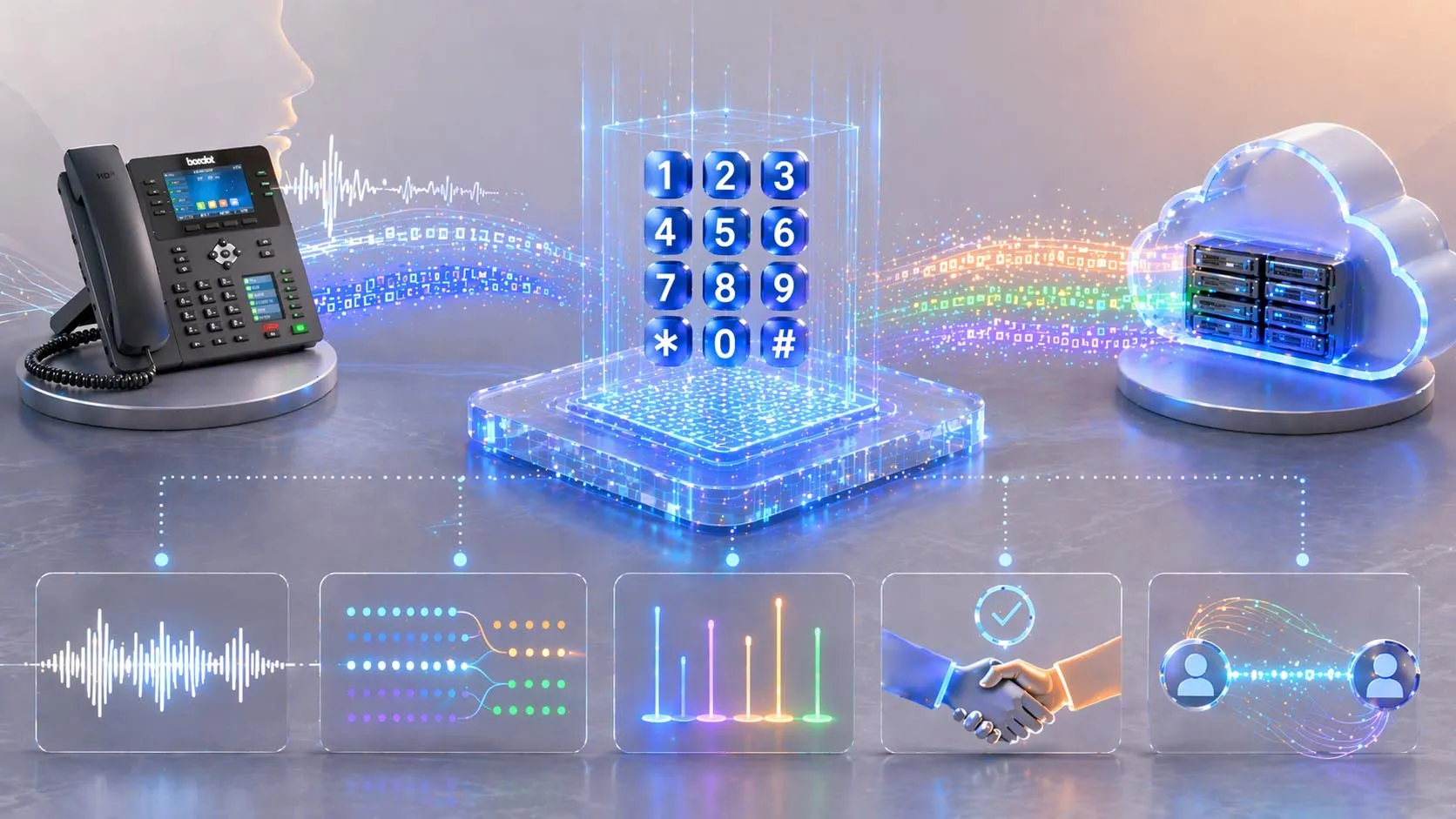
RFC 2833 DTMF is widely used in IVR systems, voicemail platforms, SIP trunks, gateways, and customer service applications.
SIP trunks, PBXs, and SBC interworking
Service providers, enterprise PBXs, and session border controllers often use RFC 2833 style DTMF as a common denominator across SIP trunks. This makes it easier to exchange digits predictably even when the voice stream uses compression or passes through several media-handling nodes.
At the same time, these environments also show why configuration matters. A trunk may advertise RFC2833, while a gateway may be set to SIP INFO, or a phone may send in-band tones. When those methods do not align, DTMF issues appear quickly.
Analog gateway migration projects
Organizations migrating from analog or TDM systems into IP telephony often depend on gateways and ATAs to preserve features such as keypad interaction with IVRs and voicemail. RFC 2833 is highly relevant here because the gateway can detect tone input from a legacy endpoint and translate it into telephone events toward the SIP side.
This helps bridge older user devices and modern IP communications without forcing every signaling step to stay inside the audio waveform.
Advantages of RFC 2833 DTMF in VoIP Systems
Higher signaling reliability across the network
The biggest advantage is reliable transport of keypad digits across packet voice systems. Instead of trusting the voice path to preserve tone quality perfectly, the system exchanges explicit events. This often produces more consistent behavior across providers, trunks, codecs, and multi-vendor environments.
For engineers, that means fewer unexplained IVR failures and less time spent tracing digit-recognition problems caused by audio treatment.
Good balance between compatibility and performance
RFC 2833 became popular because it offers a practical middle ground. It is more robust than pure in-band transport in many VoIP scenarios, but it remains closely tied to the media session rather than relying entirely on separate SIP signaling methods. This balance has helped it become a standard option across a broad range of voice products.
That broad support is one reason it still appears in almost every serious telephony platform, even when the documentation uses updated RFC language behind the scenes.
Useful for mixed environments
Many real systems are mixed environments that contain SIP phones, analog phones, IP PBXs, SBCs, gateways, IVRs, cloud trunks, and legacy applications. In those mixed environments, RFC 2833 style DTMF often becomes the method that helps all of the pieces interoperate more smoothly. It is especially effective when the design includes transcoding or carrier interconnection.
This makes it relevant not only in large carrier-grade systems but also in enterprise and SMB voice networks.
Common Technical Challenges
Negotiation mismatches
One of the most common problems is that both sides of the call do not actually agree on the same DTMF method. A device may be configured for RFC2833 while the far end expects SIP INFO or relies on in-band tones. In that case, the voice call may work normally while DTMF fails partially or completely.
Because of this, DTMF troubleshooting often begins by checking signaling negotiation, trunk profiles, PBX settings, and SBC interworking rules rather than by listening only to the call audio.
Transcoding and interworking edge cases
Although RFC 2833 is generally robust, edge cases still exist when gateways detect tones from one side and regenerate events for the other side. Poor detection, early leakage of the tone into the voice stream, or platform-specific handling differences can create duplicate digits or intermittent behavior. These issues are less common than classic in-band failures, but they can still occur in complex environments.
This is why well-designed media gateways and SBCs matter when different DTMF methods must interoperate.
Assuming RFC2833 and RFC4733 are always treated identically
Another subtle challenge is terminology. Many systems say RFC2833 in the user interface, while standards-oriented documents refer to RFC4733 or telephone-event. Most of the time, the practical deployment meaning is close enough for routine configuration. However, engineers should still read vendor behavior carefully, especially in newer platforms that support broader clock-rate handling or more detailed telephone-event negotiation.
Clear terminology helps avoid confusion during troubleshooting, vendor comparison, and SIP interconnection planning.
If voice works but IVR digits fail, the issue is often not general call quality. It is usually DTMF method mismatch, negotiation failure, or interworking behavior between call legs.
Conclusion
RFC 2833 DTMF is a widely used VoIP method for carrying keypad events as telephone-event data associated with the RTP media session rather than relying only on audible tones inside the speech stream. Its main value lies in signaling reliability. By separating DTMF handling from compressed or heavily processed voice audio, it helps IVRs, voicemail platforms, trunks, gateways, and PBXs recognize user input more accurately.
Although RFC 4733 formally superseded RFC 2833, the older name remains deeply rooted in telephony practice. That is why engineers still configure “RFC2833” on IP phones, gateways, SIP trunks, and SBCs every day. In practical deployment terms, the phrase usually points to the same core idea: machine-readable telephone-event signaling that is more dependable than simple in-band tones in many VoIP environments.
For organizations building or troubleshooting SIP systems, understanding RFC 2833 DTMF is essential. It affects IVR accuracy, voicemail access, trunk interworking, gateway migration, and overall user experience in automated call flows. In short, it is a small technical setting with a very large operational impact.
FAQ
What is RFC 2833 DTMF?
RFC 2833 DTMF is a method of sending keypad digits as RTP telephone events rather than depending only on audible tones inside the voice stream.
Is RFC 2833 still current?
RFC 2833 is still widely used as an industry term, but it was formally obsoleted by RFC 4733. In practice, many products still label the feature as RFC2833.
Why is RFC 2833 better than in-band DTMF in many VoIP systems?
Because it reduces dependence on the voice codec preserving exact tone structure. That usually makes machine recognition more reliable in compressed, transcoded, or processed voice paths.
Is RFC 2833 the same as SIP INFO?
No. RFC 2833 style DTMF uses RTP telephone events associated with the media session, while SIP INFO sends digit information in SIP signaling messages.
Where is RFC 2833 DTMF commonly used?
It is commonly used in SIP trunks, PBXs, SBCs, gateways, IVR systems, voicemail platforms, contact centers, and mixed telephony migration projects.
Can RFC 2833 DTMF still fail?
Yes. Problems can still happen because of negotiation mismatches, gateway interworking issues, provider expectations, or inconsistent DTMF settings across different call legs.
Why do vendors still say RFC2833 if RFC4733 exists?
Because RFC2833 became the common telecom term long ago, and many interfaces, deployment guides, and habits kept using that name even after RFC 4733 became the formal successor.