Internal Telephone System: An Essential Office Tool for Enterprise Communication
Discover how a Becke Telcom internal telephone system strengthens enterprise communication with faster extension calling, professional call handling, scalable IP telephony, and more efficient office coordination.
Becke Telcom
In today’s fast-moving business environment, communication speed, clarity, and reliability directly affect how efficiently an organization operates. While email, chat, and video platforms have become common in daily work, voice communication still remains one of the fastest and most effective ways to connect people, resolve issues, and keep operations moving. That is why an internal telephone system continues to be an essential part of modern enterprise communication.
At Becke Telcom, we view an internal telephone system as more than a collection of office phones. It is a structured communication foundation that helps enterprises connect people, departments, sites, and workflows through one organized and scalable platform. From front desks and managers to departments, branch offices, and remote staff, the right system creates a more professional, responsive, and efficient business environment.
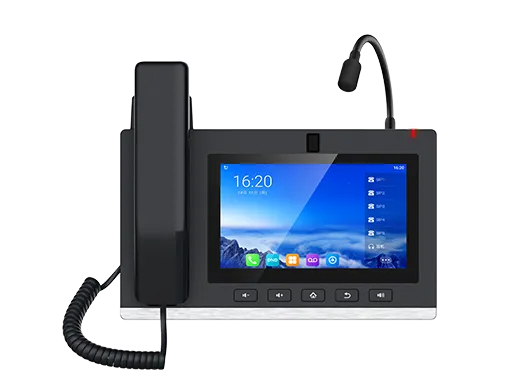
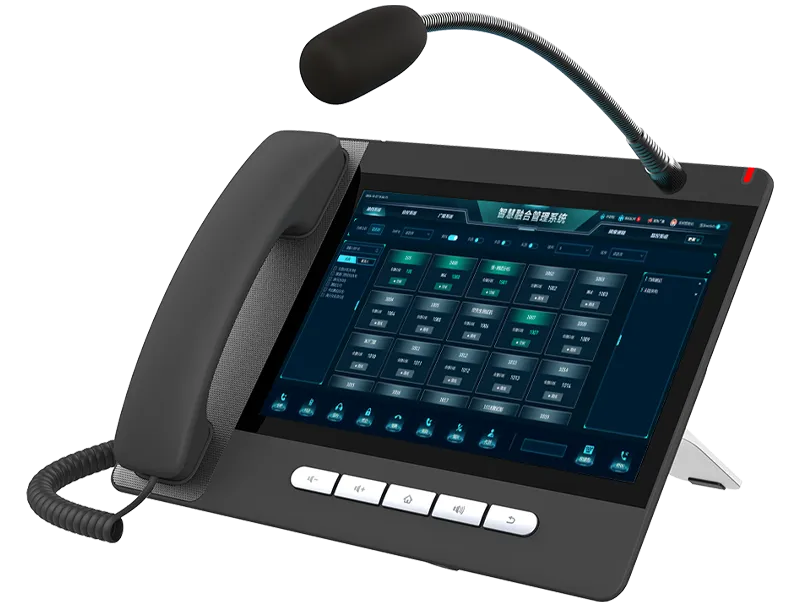
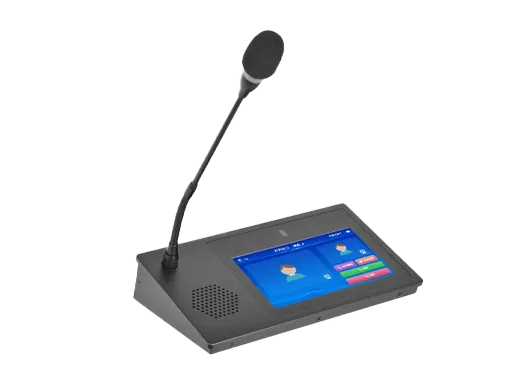
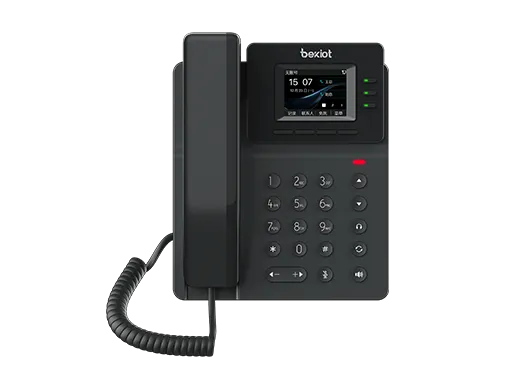
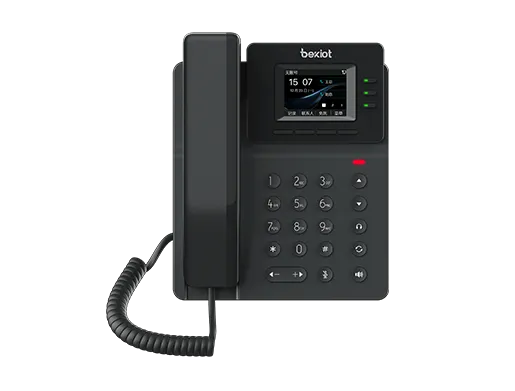
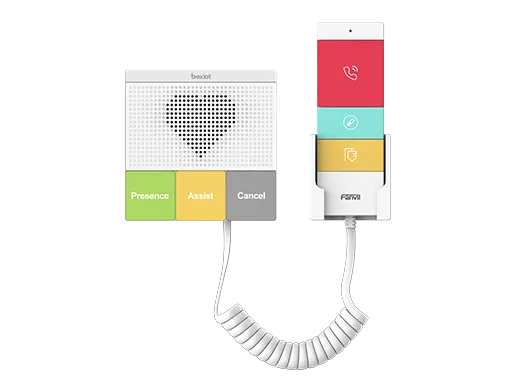
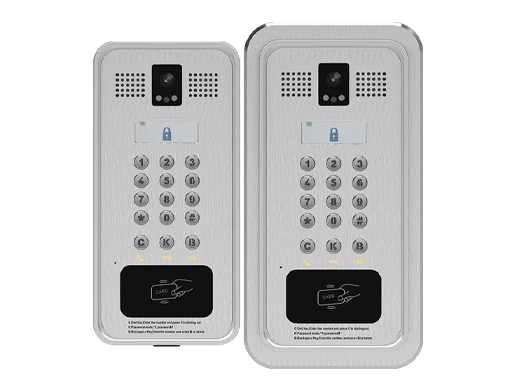
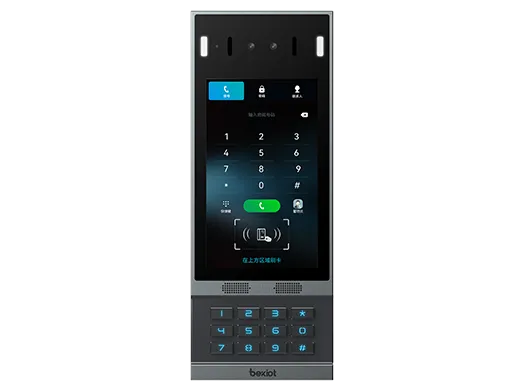
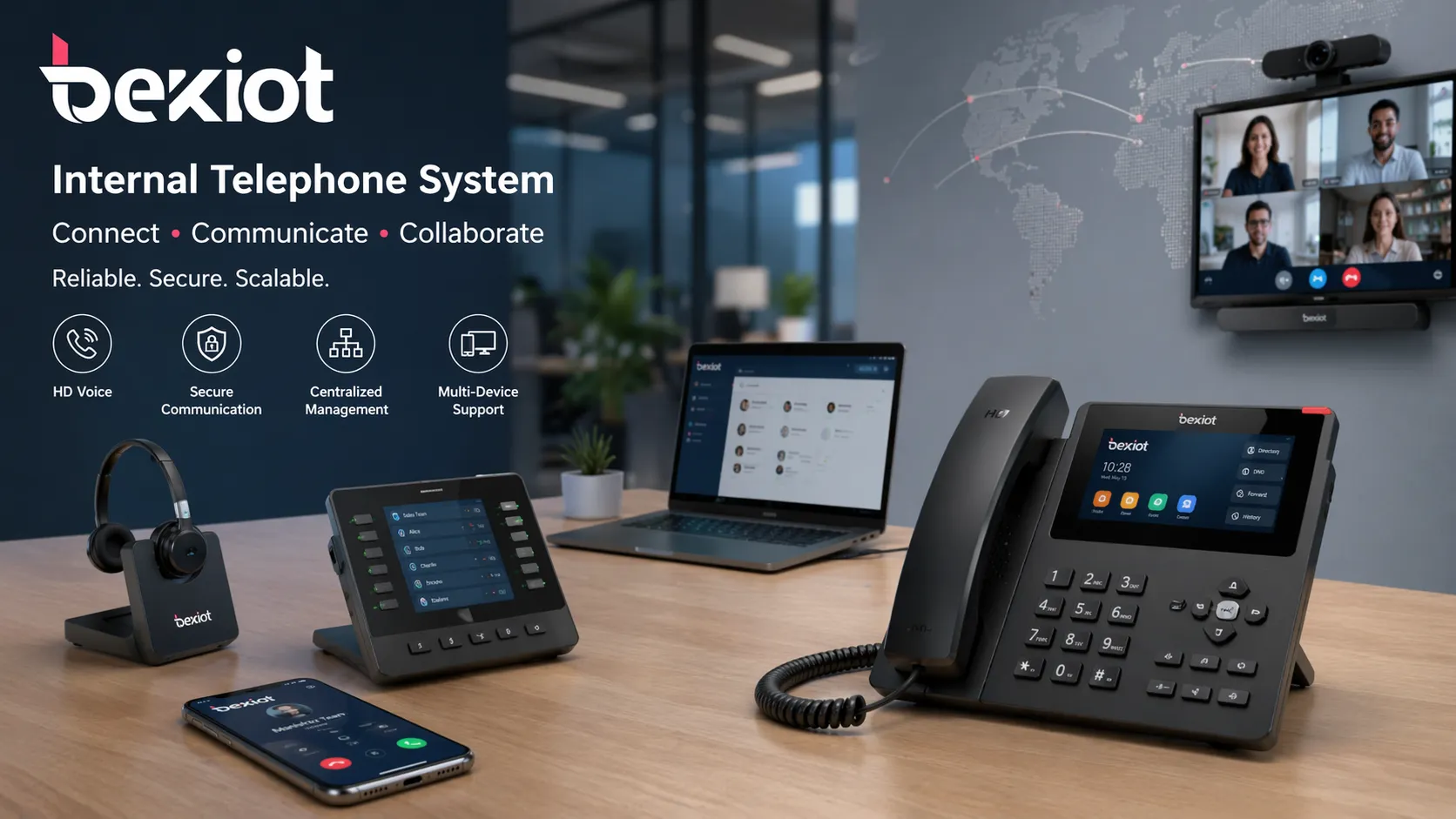
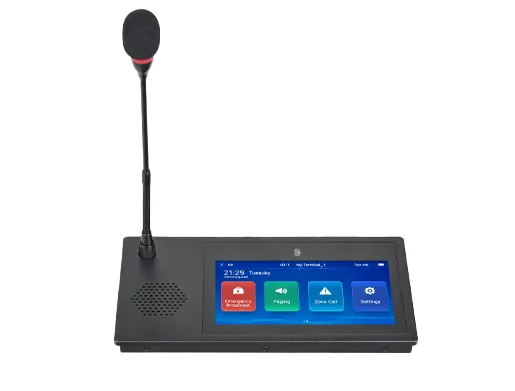
An internal telephone system helps connect employees, departments, and office functions through a unified communication structure.
What Is an Internal Telephone System?
A structured communication network for business users
An internal telephone system is a business voice communication platform that allows employees and departments to call one another using extensions within the organization. Instead of depending on separate outside numbers or unmanaged mobile communication, the system creates a unified internal network for faster and more organized calling.
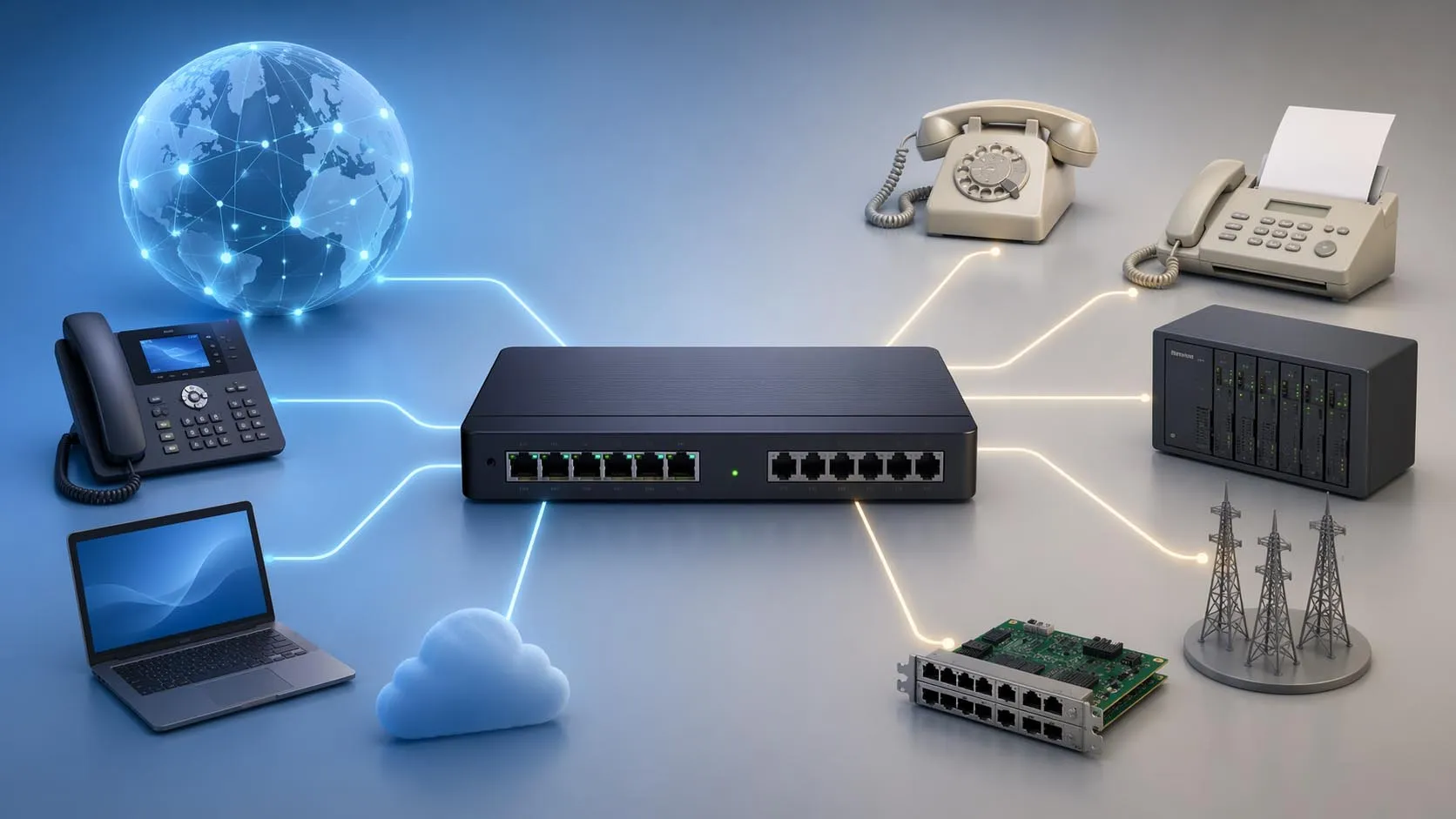
Typically built around a PBX, IP PBX, or cloud-based telephony platform, an internal telephone system supports extension dialing, call routing, transfer, voicemail, group calling, and other office communication features. In practical terms, it helps reception transfer calls more efficiently, enables departments to collaborate more quickly, and gives enterprises better control over how calls move across the business.
Why it still matters in a digital workplace
Many businesses rely heavily on digital collaboration tools, but voice still matters because it delivers immediacy. When a team needs a fast answer, when a manager must coordinate across departments, or when a customer needs to reach the right person without delay, a direct call is often the most efficient option. An internal telephone system supports this need by making voice communication structured, available, and easy to manage.
It also reduces communication friction. Rather than relying on personal phone numbers, fragmented apps, or inconsistent call handling habits, the enterprise gains a professional internal framework that keeps people connected and improves day-to-day coordination.
Why Enterprises Still Need an Internal Telephone System
Faster internal response
In a real office setting, speed matters. Employees often need immediate answers from finance, HR, operations, service teams, or management. Sending a message may not be enough when the issue is time-sensitive. An internal telephone system makes it easy to call the right extension instantly, which helps reduce delays and improves coordination across the organization.
This is especially valuable in businesses where communication supports continuous workflows, customer response, administrative operations, or cross-functional decision-making. When teams can reach the right people quickly, the business becomes more agile and more efficient.
A more professional communication experience
Professionalism is not only reflected in products and services. It is also reflected in how a business communicates. An internal telephone system allows enterprises to create structured call flows, assign department extensions, support front-desk handling, and route incoming calls to the right destination with more consistency.
For customers, partners, and visitors, this creates a stronger impression of organization and reliability. For internal users, it makes daily communication clearer and easier to manage. The result is a better experience on both sides of the conversation.
Enterprise communication works best when people can reach the right person at the right time without confusion or delay.
Better control and lower communication complexity
An internal telephone system gives the business a centralized way to manage extensions, routing logic, permissions, and device access. This is much more effective than relying on disconnected phones or informal communication habits. As the company grows, administrators can add users, expand departments, or connect branch locations without losing communication structure.
The system also simplifies internal calling by keeping communication within one managed environment. This makes operations easier to control and helps enterprises build a communication model that is more scalable, more professional, and more aligned with long-term growth.
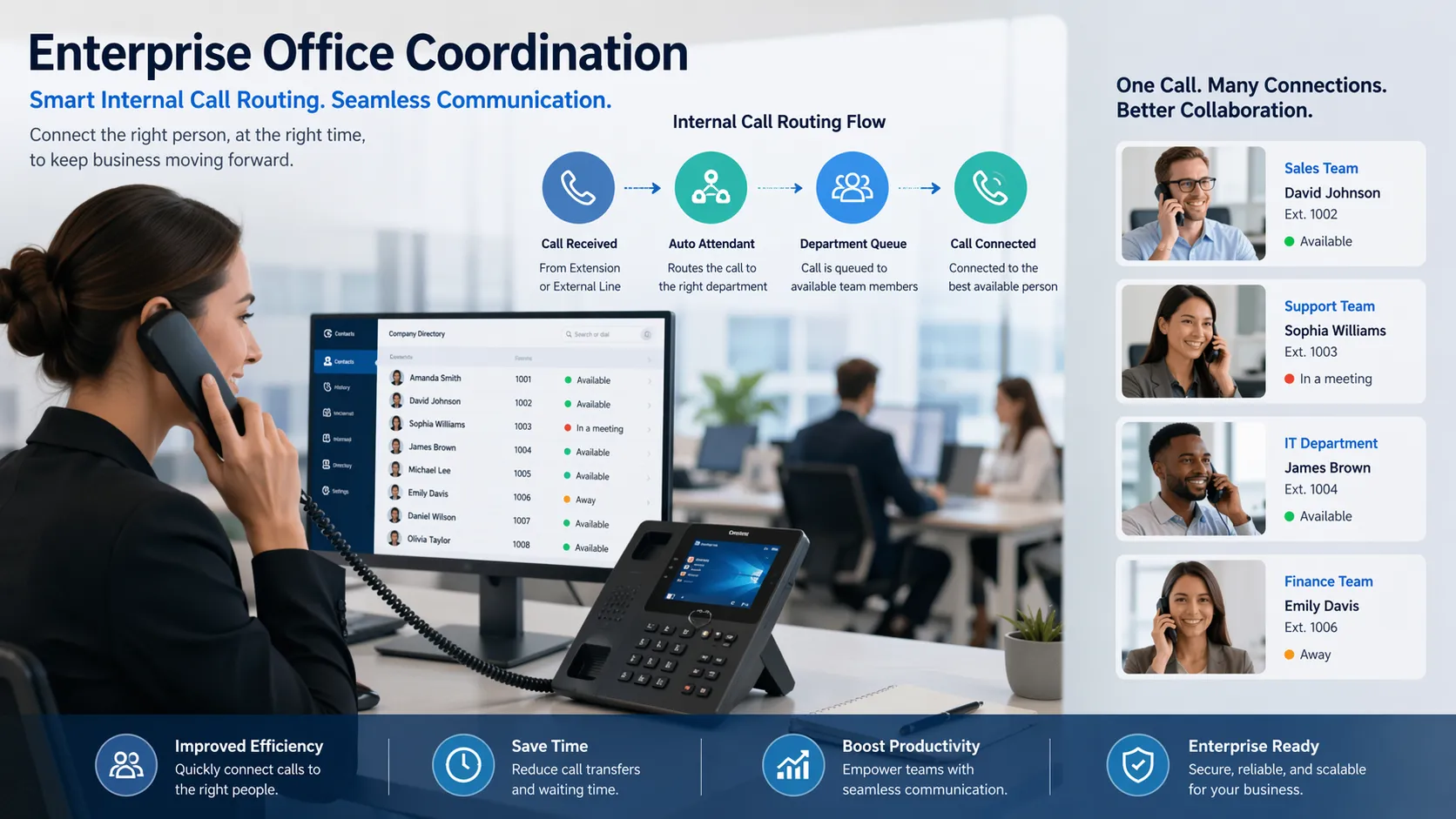
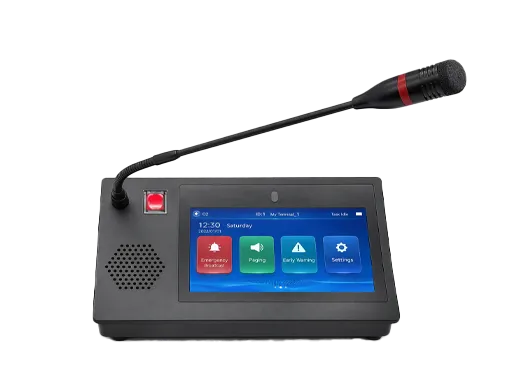
Structured extension dialing and call routing help enterprises improve office coordination and response efficiency.
Core Features of a Modern Internal Telephone System
Essential voice communication functions
A modern internal telephone system is expected to do much more than basic calling. Common business features include extension dialing, call transfer, call forwarding, voicemail, call hold, ring groups, conference calling, receptionist handling, and auto attendant functions. These features help enterprises manage internal and incoming calls with more speed and consistency.
For businesses with higher communication demands, these tools are not optional extras. They are part of the operational structure that keeps employees reachable, departments connected, and customer calls properly handled throughout the day.
Extension-to-extension calling
Call transfer and forwarding
Voicemail and missed call management
Ring groups and department routing
Conference and group calling
Reception and auto attendant functions
Scalability for growing businesses
One of the key strengths of a modern internal telephone system is scalability. A company may begin with a small office and later expand into multiple departments, larger facilities, or branch locations. The communication system should be able to grow with that business, rather than becoming a limitation.
This is where IP-based systems bring clear advantages. A well-designed IP PBX or enterprise telephony platform can support more users, more devices, and more flexible deployment models without requiring the company to rebuild its communication structure from the beginning.
Support for modern working styles
Today’s enterprises are no longer limited to a single office floor or one fixed working pattern. Many businesses now operate across multiple sites, support hybrid teams, or require staff to remain reachable outside the traditional desk environment. A modern internal telephone system can support desk phones, softphones, video phones, and mobile endpoints within the same communication environment.
This gives enterprises more flexibility while maintaining one consistent internal identity. Employees stay connected to the organization, managers maintain control, and business communication remains structured even when users are distributed across locations.
Where Internal Telephone Systems Deliver the Most Value
Office and administrative environments
Internal telephone systems are widely used in offices where departments need to collaborate frequently and respond quickly. Reception desks, executive offices, finance teams, HR departments, service groups, and operations teams all benefit from having a clear extension structure and centralized call handling.
In these environments, the system supports both internal efficiency and external professionalism. Calls can move quickly between users, incoming enquiries can be handled more effectively, and the business gains a more structured communication image overall.
Multi-site and enterprise-wide communication
For organizations with more than one office, an internal telephone system can connect users across locations through one unified platform. This allows branch staff, management teams, and support departments to communicate as if they were in the same building. It reduces communication barriers between sites and makes the enterprise feel more connected.
It also supports operational consistency. Instead of each location using isolated communication tools, the organization can manage extensions, routing, and user access centrally. This creates a stronger enterprise communication framework and simplifies future expansion.
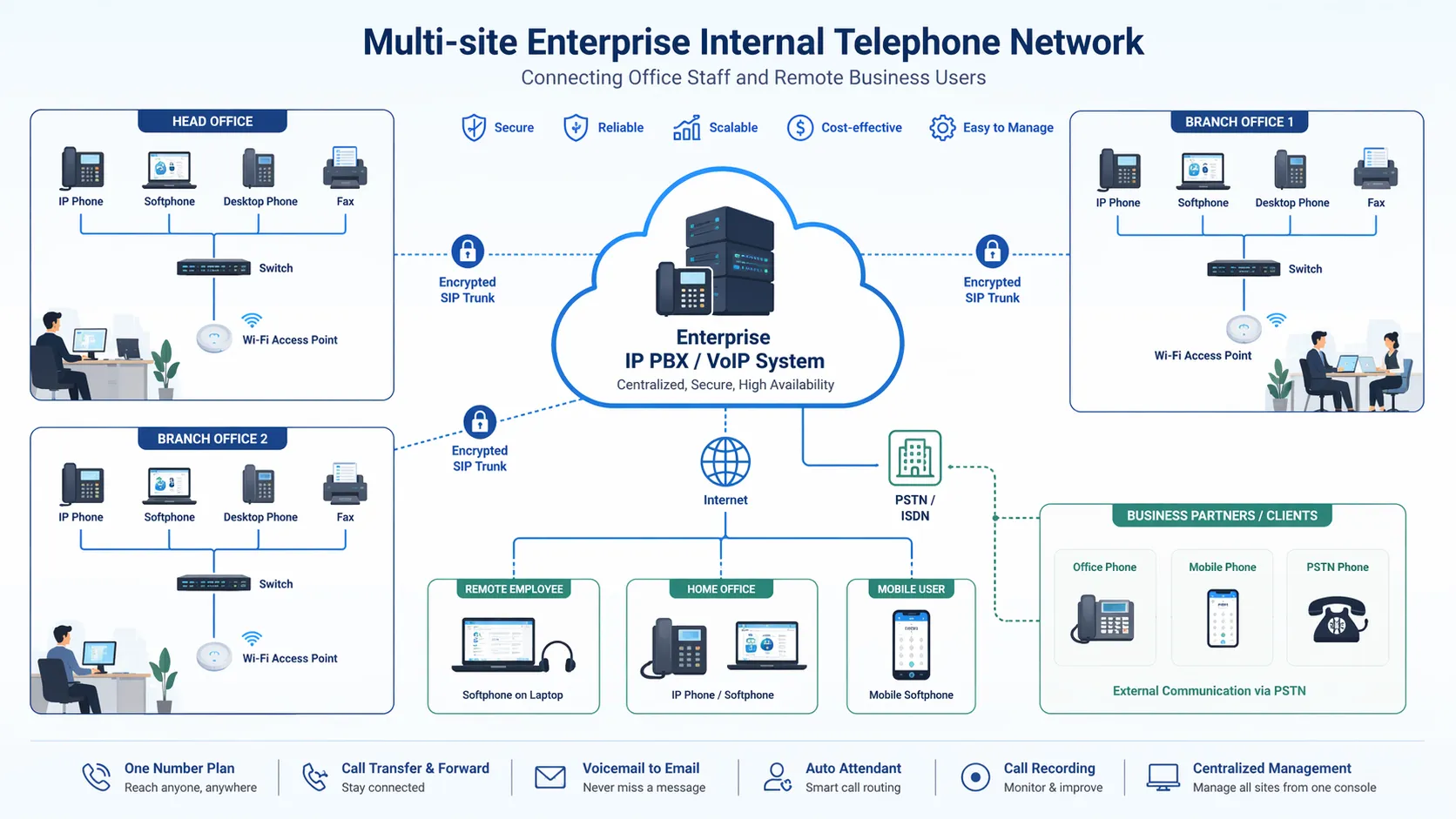
Internal telephone systems help unify communication across departments, branch offices, and distributed teams.
How to Choose the Right Internal Telephone System
Think beyond the handset
When businesses evaluate an internal telephone system, the decision should not focus only on desk phones. The real question is how the system will support communication across the enterprise. That includes user capacity, call flow design, reception needs, department structure, remote access, reporting requirements, and future growth plans.
The best solution is the one that fits the way the business actually communicates. For some organizations, a straightforward office extension system may be enough. For others, a more advanced IP-based platform with multi-site connectivity, mobile access, and richer call handling features will deliver far greater long-term value.
Key considerations for deployment
Before choosing a platform, enterprises should consider the number of users, number of locations, type of endpoints, expected call volume, customer-facing workflows, and whether the system needs to support video, paging, or unified communications in the future. Ease of management, reliability, audio quality, and scalability should all be part of the decision.
At Becke Telcom, we believe the right system should not only solve today’s office communication needs. It should also provide a stable and flexible foundation for future business development.
A well-chosen internal telephone system is not just an office utility. It is part of the enterprise communication infrastructure that supports growth, service quality, and operational efficiency.
Why Becke Telcom Fits This Conversation
More than traditional office telephony
Becke Telcom focuses on professional business and industrial communication solutions that go beyond basic office calling. In addition to internal telephony, modern enterprise environments often require stronger integration across IP phones, IP PBX platforms, paging, intercom, dispatch, and multi-site communications. This is where communication systems become more valuable as part of a broader business infrastructure.
For enterprises looking to build a more capable communication environment, an internal telephone system can serve as the starting point for a wider solution that supports not only office calls, but also operational coordination, centralized management, and future communication expansion.
Conclusion
An internal telephone system remains an essential office tool because it solves a core business need: helping people communicate quickly, clearly, and professionally. It improves internal coordination, strengthens customer call handling, creates a more organized office structure, and supports scalable enterprise communication as the business grows.
In a modern workplace, efficient communication is not only about having more tools. It is about having the right structure behind those tools. A strong internal telephone system gives enterprises that structure and helps turn daily communication into a more reliable business advantage.
For businesses that want a more professional and scalable communication environment, Becke Telcom can support the move from basic office telephony to a stronger enterprise communication foundation.
FAQ
What is an internal telephone system used for in an office?
An internal telephone system is used to connect employees, departments, reception desks, and business locations through extensions and managed call routing. It helps offices communicate more quickly and professionally while improving internal coordination and incoming call handling.
Is an internal telephone system still relevant for modern businesses?
Yes. Even with chat and video tools, voice communication remains one of the fastest ways to coordinate work, transfer calls, handle reception tasks, and respond to urgent needs. An internal telephone system keeps that communication structured and manageable.
What is the difference between an internal telephone system and an IP PBX?
An internal telephone system is the broader business calling environment, while an IP PBX is one of the technologies used to build and manage that environment. An IP PBX provides the core control for extensions, routing, and advanced telephony features over an IP network.
Can internal telephone systems support remote or branch users?
Yes. Modern systems can support remote users, softphones, mobile access, and branch office connectivity, allowing enterprises to keep one communication structure across distributed teams and locations.
We use cookie to improve your online experience. By continuing to browse this website, you agree to our use of cookie.
Cookies
This Cookie Policy explains how we use cookies and similar technologies when you access or use our website and related services. Please read this Policy together with our Terms and Conditions and Privacy Policy so that you understand how we collect, use, and protect information.
By continuing to access or use our Services, you acknowledge that cookies and similar technologies may be used as described in this Policy, subject to applicable law and your available choices.
Updates to This Cookie Policy
We may revise this Cookie Policy from time to time to reflect changes in legal requirements, technology, or our business practices. When we make updates, the revised version will be posted on this page and will become effective from the date of publication unless otherwise required by law.
Where required, we will provide additional notice or request your consent before applying material changes that affect your rights or choices.
What Are Cookies?
Cookies are small text files placed on your device when you visit a website or interact with certain online content. They help websites recognize your browser or device, remember your preferences, support essential functionality, and improve the overall user experience.
In this Cookie Policy, the term “cookies” also includes similar technologies such as pixels, tags, web beacons, and other tracking tools that perform comparable functions.
Why We Use Cookies
We use cookies to help our website function properly, remember user preferences, enhance website performance, understand how visitors interact with our pages, and support security, analytics, and marketing activities where permitted by law.
We use cookies to keep our website functional, secure, efficient, and more relevant to your browsing experience.
Categories of Cookies We Use
Strictly Necessary Cookies
These cookies are essential for the operation of the website and cannot be disabled in our systems where they are required to provide the service you request. They are typically set in response to actions such as setting privacy preferences, signing in, or submitting forms.
Without these cookies, certain parts of the website may not function correctly.
Functional Cookies
Functional cookies enable enhanced features and personalization, such as remembering your preferences, language settings, or previously selected options. These cookies may be set by us or by third-party providers whose services are integrated into our website.
If you disable these cookies, some services or features may not work as intended.
Performance and Analytics Cookies
These cookies help us understand how visitors use our website by collecting information such as traffic sources, page visits, navigation behavior, and general interaction patterns. In many cases, this information is aggregated and does not directly identify individual users.
We use this information to improve website performance, usability, and content relevance.
Targeting and Advertising Cookies
These cookies may be placed by our advertising or marketing partners to help deliver more relevant ads and measure the effectiveness of campaigns. They may use information about your browsing activity across different websites and services to build a profile of your interests.
These cookies generally do not store directly identifying personal information, but they may identify your browser or device.
First-Party and Third-Party Cookies
Some cookies are set directly by our website and are referred to as first-party cookies. Other cookies are set by third-party services, such as analytics providers, embedded content providers, or advertising partners, and are referred to as third-party cookies.
Third-party providers may use their own cookies in accordance with their own privacy and cookie policies.
Information Collected Through Cookies
Depending on the type of cookie used, the information collected may include browser type, device type, IP address, referring website, pages viewed, time spent on pages, clickstream behavior, and general usage patterns.
This information helps us maintain the website, improve performance, enhance security, and provide a better user experience.
Your Cookie Choices
You can control or disable cookies through your browser settings and, where available, through our cookie consent or preference management tools. Depending on your location, you may also have the right to accept or reject certain categories of cookies, especially those used for analytics, personalization, or advertising purposes.
Please note that blocking or deleting certain cookies may affect the availability, functionality, or performance of some parts of the website.
Restricting cookies may limit certain features and reduce the quality of your experience on the website.
Cookies in Mobile Applications
Where our mobile applications use cookie-like technologies, they are generally limited to those required for core functionality, security, and service delivery. Disabling these essential technologies may affect the normal operation of the application.
We do not use essential mobile application cookies to store unnecessary personal information.
How to Manage Cookies
Most web browsers allow you to manage cookies through browser settings. You can usually choose to block, delete, or receive alerts before cookies are stored. Because browser controls vary, please refer to your browser provider’s support documentation for details on how to manage cookie settings.
Contact Us
If you have any questions about this Cookie Policy or our use of cookies and similar technologies, please contact us at support@becke.cc .